





Aerial view of a gray outdoor air conditioning condenser unit mounted on a concrete pad next to a house with vinyl siding.

AC Repair in Syracuse, NY

Tell us about the job

Takes about a minute. No obligation.

RepairCentral ACOnondaga County, NY
Step 1 of 2

What ZIP code is the job in?

Your AC in Syracuse only has to work two months a year, July and August, with afternoon highs around 79°F. That's a short season and a mild one. A compressor or a fan motor here isn't fighting the kind of heat load it would in a hotter state, so it tends to hold up well over the years. When something does go wrong, it's rarely because the system was pushed too hard. More often it's a part that's simply reached the end of its life, or something that got missed at the last service. That's usually worth fixing rather than replacing, since the rest of the system hasn't been under much strain.

2 months
July through August, your air conditioner is on duty
79°F
the average summer afternoon it cools against
15 hail events
in ten years, and hail bends the fins on outdoor coils
186 wind events
in ten years, and wind drives debris into outdoor units
Isometric cutaway illustration of a house with a dark shingled roof, showing interior ductwork connected to an indoor air handler and an outdoor condenser unit beside the building.
Your air conditioner works hardest from July through August.

NOAA nClimDiv, 1991–2020 normals

Cooling starts in July here, with June the only month to catch problems early.

A weak capacitor or low charge usually shows itself the first hot week, not in a quiet June tuneup.

Half these homes are old enough to ask the age question first

Half the homes here were built by 1964
Climate zone 5A
Power costs 24.43 cents a kWh statewide

Half the homes in Onondaga County were built in 1964 or earlier. If your system came with the house and nobody's swapped it since, it may be well past a typical service life even with a mild season behind it. A failed capacitor or contactor is often just a part giving out, but on an old unit it can also be the first sign the compressor itself is getting tired. Worth asking the contractor straight out how much life is likely left before you commit to the repair.

It's probably a normal part failure

This county has logged 186 damaging wind events and 22 winter storms over the past decade, and that's normal for the area, not a sign your AC has had it worse than any other unit in Syracuse. None of that is aimed at your system. So when it quits, look for the ordinary cause first, a capacitor, a contactor, a low charge, and get it confirmed before assuming the unit itself is done.

Find a contractor
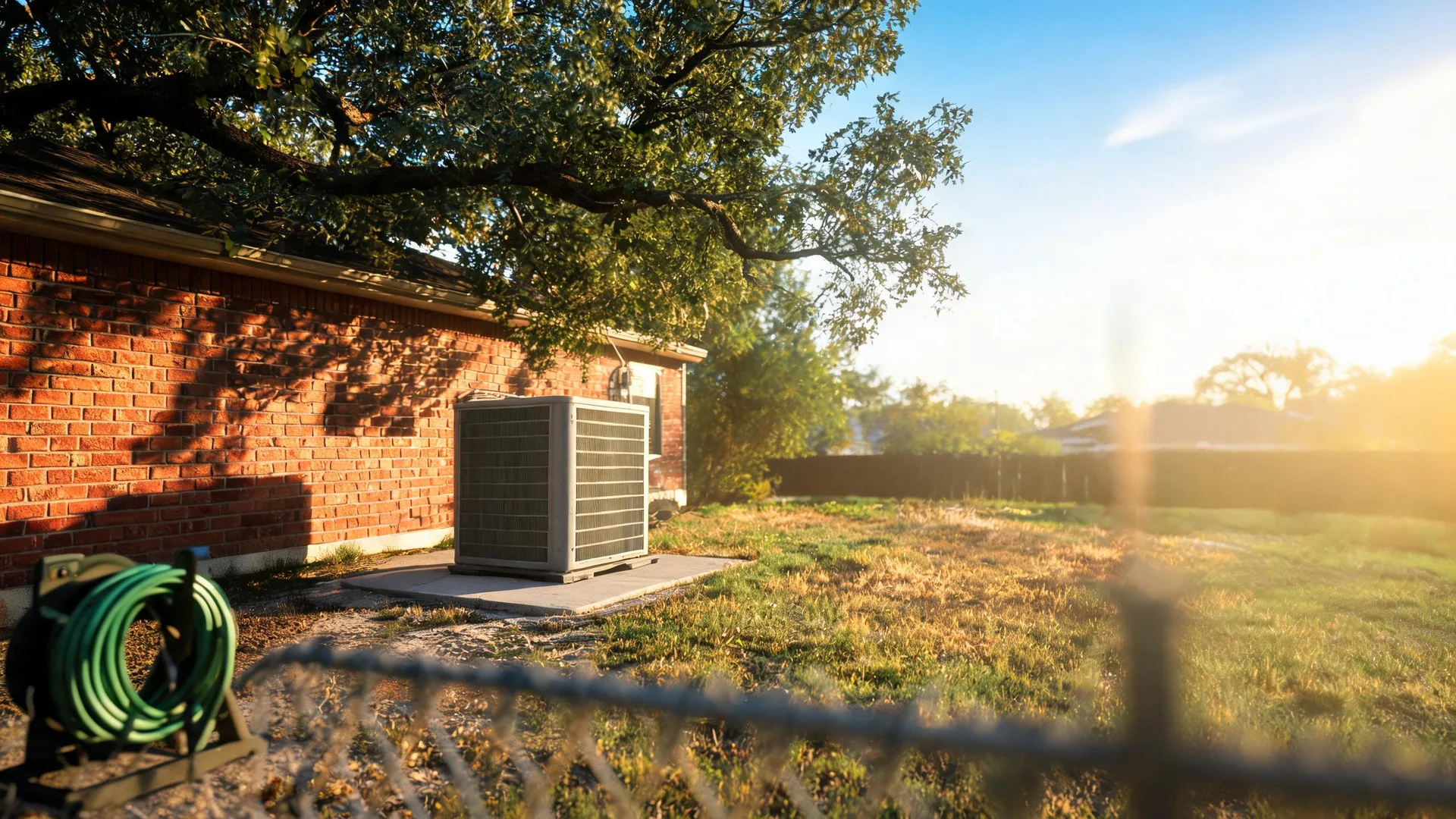
An outdoor air conditioning condenser unit mounted on a concrete pad beside a house, with electrical conduit running to a wall-mounted disconnect box.

Keep running it, and the small problem finds a bigger one

A refrigerant leak doesn't hold steady. The system keeps running low on charge, the compressor keeps working harder to move what's left, and the metal it runs through gets hotter than it should. Left alone, a small leak is a repair. Ignored through a few more weeks of runtime, it's a compressor on its way out. Airflow problems follow the same pattern. A coil that's starting to ice over blocks more airflow the longer it runs, which makes more ice, which blocks more air. Shutting it off before the ice builds up is often the difference between a coil cleaning and a compressor that's been starved of airflow for days. A bad capacitor is similar. It can limp a motor along for a while, drawing more current than it should every time the unit cycles on, until the motor it's feeding gives out too. None of this means every noise is an emergency. But a problem that announces itself early and gets left running is rarely the same size problem a week later.

What you'll notice first

Warm air out of the vents while the unit still runs usually points to the compressor or the refrigerant charge. A system that short cycles, kicking on and off every few minutes instead of running a full cycle, is fighting a bad capacitor or a filter choking the airflow. Ice on the copper line or the indoor coil means airflow is restricted somewhere upstream, and running it like that stresses the compressor. A breaker that trips more than once is telling you something downstream is drawing too much power, and resetting it again isn't the answer.

What the noise and the smell tell you

A loud bang or screech when the unit starts is usually a fan motor or a loose part inside the condenser. Shut it off until someone looks at it rather than let it keep running. A musty smell from the vents often means standing water in the drain pan or a clogged condensate line, and that can overflow and do its own damage if it sits. None of these signs say how simple the fix will be, but none of them improve with time. The sooner a contractor hears the noise or sees the system running, the easier it is to find the actual cause instead of guessing afterward.

An overhead view of a residential air conditioning condenser unit mounted on a concrete pad next to a house with vinyl siding.

A new air conditioner would save little on running costs in Onondaga County, so the repair decision comes down to the unit's condition.

  • A new one at the federal minimum, 13.4 SEER2$160 a year
  • An older air conditioner$180 a year

Estimates for a typical Onondaga County home, compared with an older unit built to the previous federal minimum, from EIA household energy data, New York fuel prices and NOAA climate normals. Your home will differ.

Repair makes sense when a part like a capacitor or contactor has failed.

Replacement makes sense when the compressor has failed or the system uses R-22 refrigerant, which is no longer made.

Age and wear matter more than whether a part failed. A capacitor or contactor is cheap to replace and doesn't say anything bad about the rest of the unit. Those parts wear out on their own schedule, regardless of how well everything else is running. The compressor is a different question. If a contractor finds the compressor itself is weak, low on charge with no obvious leak, or failing in a way that points back to the compressor, that's worth weighing against the age of the whole system rather than just paying for the one repair. A unit that's otherwise sound is almost always worth fixing. One where the compressor is going, on top of an old coil or a refrigerant type that's hard to source, is a different conversation.