A row of illuminated white colonial houses with black shutters and a stone wall along a road at dusk.

AC Repair in Spring Valley, NY

Tell us about the job

Takes about a minute. No obligation.

RepairCentral ACRockland County, NY
Step 1 of 2

What ZIP code is the job in?

A small problem leans on other parts

A refrigerant leak makes the compressor work harder to move what little is left. A dirty coil makes the blower push against more resistance. Neither part is built to carry that extra load for long, so a problem that starts small spreads to the compressor or the blower motor if the system keeps running.


Ice means shut it off, not wait it out

Once a coil ices over, running the system longer does not melt it, it builds. Airflow drops further, more of the coil turns cold, and the compressor can end up pulling in liquid refrigerant instead of gas. That is what ends a compressor outright, the kind of failure that turning the system off early would have avoided.

3 months
June through August, your air conditioner is on duty
82°F
the average summer afternoon it cools against
11 hail events
in ten years, and hail bends the fins on outdoor coils
42 wind events
in ten years, and wind drives debris into outdoor units
Isometric cutaway illustration of a single-story house showing interior rooms with ductwork and an air handler, connected by refrigerant lines to an outdoor condenser unit on the left.
Your air conditioner works hardest from July through August.

NOAA nClimDiv, 1991–2020 normals

Cooling in Spring Valley runs June through August.

May is when a weak part gets found, before the first hot week asks more of it.

Half the homes in Rockland County were built by 1971, and so was the system cooling a lot of them

Half the homes here were built by 1971
Cooling runs June through August
Summer afternoons average 82°F

New York homes paid 24.43 cents per kilowatthour in 2024, among the highest rates in the country. An AC that's low on refrigerant or fighting a dirty coil draws more power to do the same cooling, and at that rate the difference shows up on the bill fast. A system that keeps running this way all summer just keeps pulling that extra power the whole time. Fixing the actual cause brings the draw back down. Patching around it, or letting it ride, does not.

This AC hasn't been worked hard. That's why repair usually makes sense.

Summer cooling here only has to carry three months, June through August, with afternoons averaging around 82°F. That's a light enough load that a system in for repair usually has plenty of life left in it. Whatever's gone wrong likely comes down to one worn part, not a machine that's been run into the ground. Worth getting it looked at before the next hot stretch.

Find a contractor
A man in a dark long-sleeve shirt and tan work pants, seen from behind, carries a canvas tool bag up porch steps toward a dark green front door beside a potted shrub.
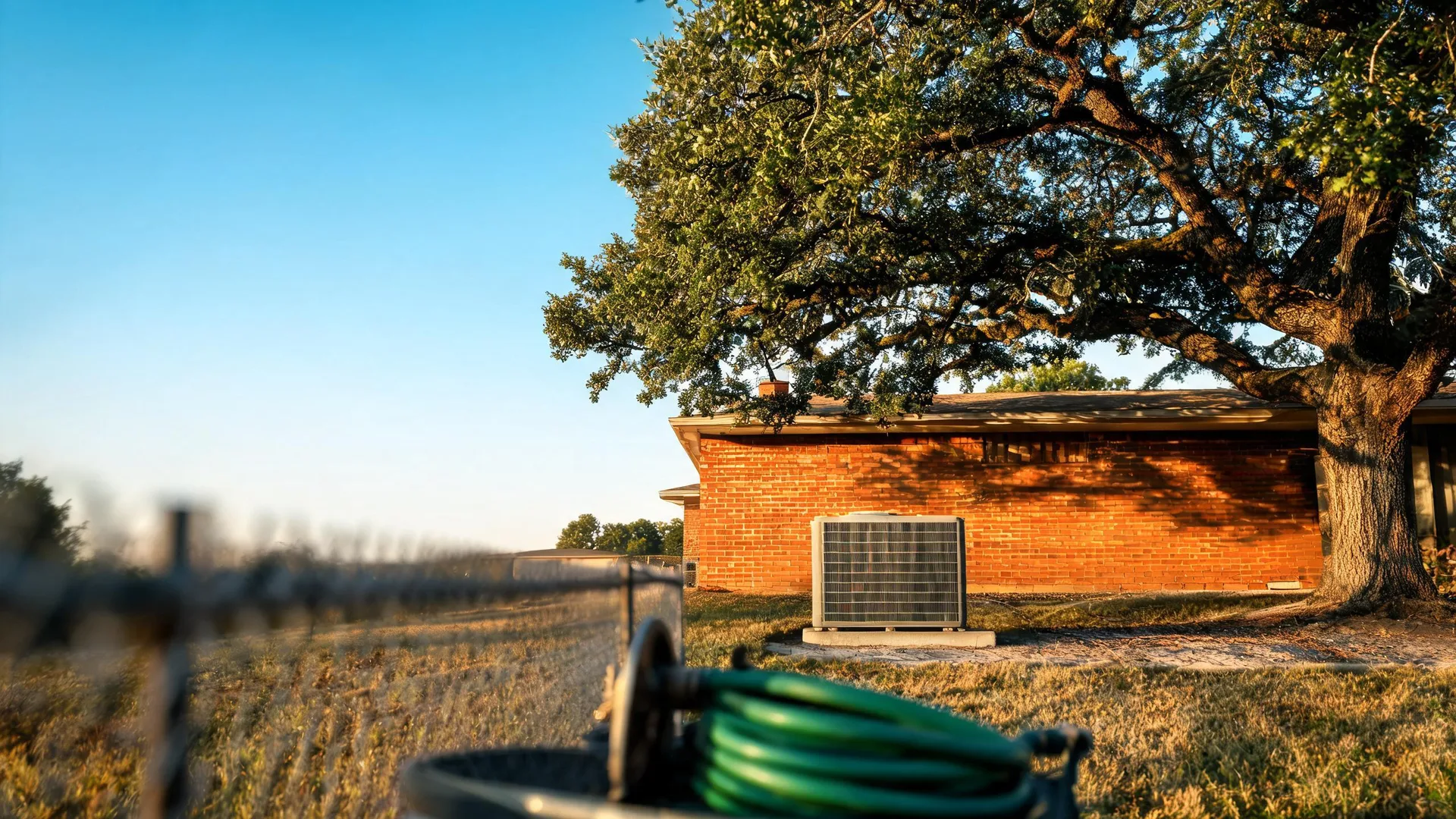
A gray residential air conditioner condenser unit mounted on a concrete pad in an open grass field.

Worth asking how old it is before fixing it

If the system in your house dates back to when the house was built, age is worth asking about before money goes into this repair. A contractor can check the age off the nameplate and tell you where it stands next to a normal lifespan. If it's near the end, that changes the math on a big repair. If it's not, fixing the worn part and moving on is the right call.

Warm air from the vents means the cycle isn't finishing the job

A system that runs but doesn't cool points to a few usual suspects. The compressor might be struggling. The refrigerant could be low. Or the blower isn't moving enough air across the coil. Short cycling, where the system shuts off and restarts within a few minutes, adds wear every time it happens and is worth mentioning when the contractor arrives.

A sound or a smell is the system telling you where to look

A grinding or screeching points to the blower motor or fan bearings. A musty smell usually means standing water somewhere it shouldn't be, often a clogged condensate line backing up instead of draining outside. Neither gets better by running the system more. Catching either one early keeps it from taking out another part.

Overhead view of an air conditioning condenser unit on a concrete pad next to a house with asphalt shingle roofing and vinyl siding.

A new air conditioner would save little on running costs in Rockland County, so the repair decision comes down to the unit's condition.

  • A new one at the federal minimum, 13.4 SEER2$290 a year
  • An older air conditioner$310 a year

Estimates for a typical Rockland County home, compared with an older unit built to the previous federal minimum, from EIA household energy data, New York fuel prices and NOAA climate normals. Your home will differ.

Repair makes sense when a part like a capacitor or contactor has failed.

Replacement makes sense when the compressor has failed or the system uses R-22 refrigerant, which is no longer made.

A repair fixes the part that failed. It doesn't do anything for the parts that didn't, and on most systems that's still most of the system. If the compressor itself is bad, that's a different conversation, since the compressor is the most expensive part to replace and the labor to swap it is significant. But a bad capacitor, a worn contactor, a failed fan motor, these don't say anything about the compressor's condition one way or the other. A contractor can tell you what failed and what that part's failure does or doesn't suggest about the rest of the system. That's the question worth asking, not just what it costs to fix.