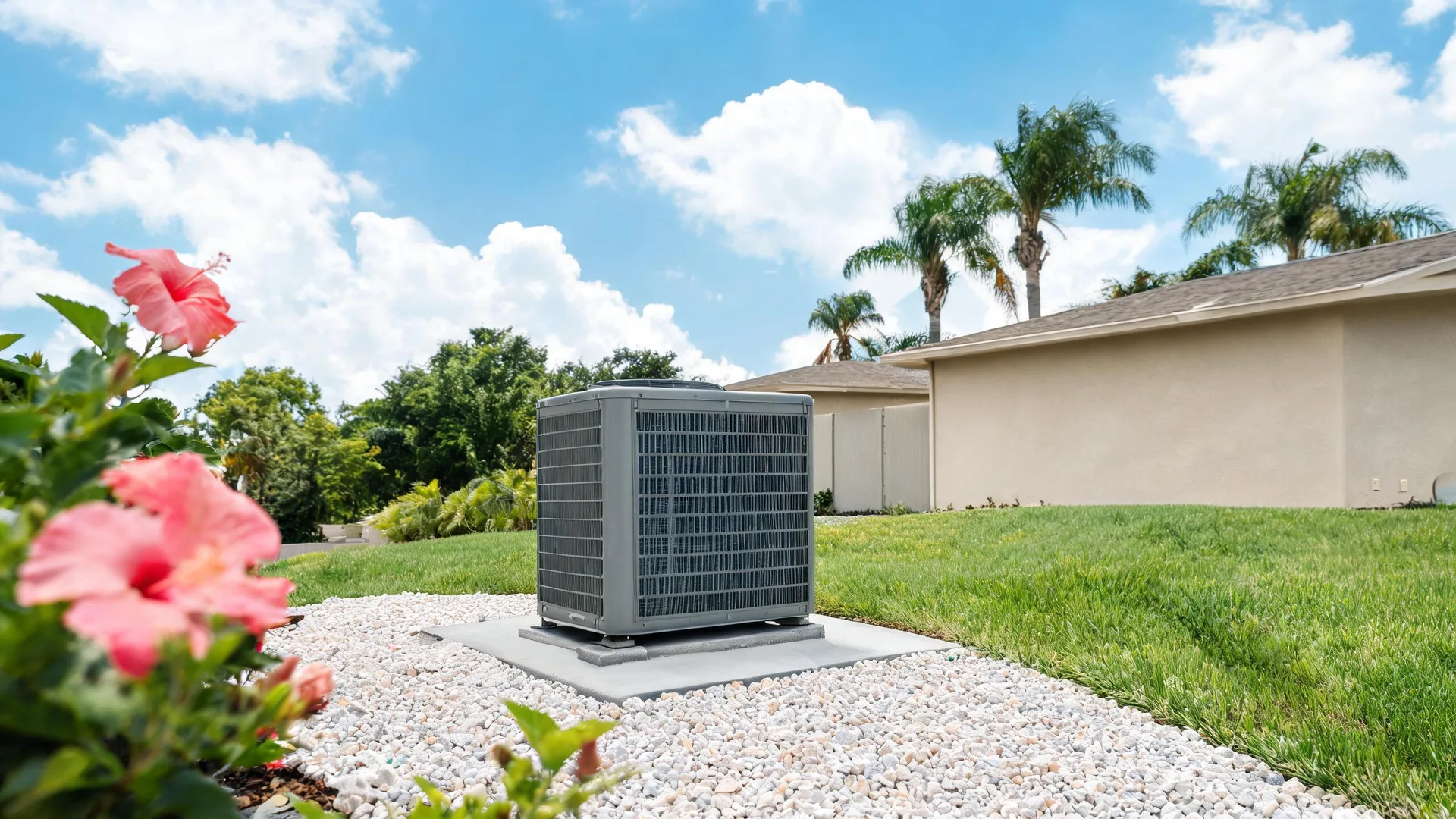
An outdoor air conditioning condenser unit mounted on a concrete pad next to a blue-sided residential house at sunset.

AC Repair in Schenectady, NY

Tell us about the job

Takes about a minute. No obligation.

RepairCentral ACSchenectady County, NY
Step 1 of 2

What ZIP code is the job in?

What the repair history tells you

A unit that's had one compressor or coil failure is giving you a warning. A unit that's needed a new capacitor or a refrigerant top-off every season is telling you the bigger parts are on their way out. Age matters less than the pattern of what keeps breaking.


When fixing it stops making sense

A failed capacitor or contactor is a cheap part and a quick fix, worth doing almost every time. A cracked coil or a failing compressor is a different story, since both sit at the center of how the system works and cost real money to replace on their own. At that point you're deciding whether to put that money into an old system or a new one.

2 months
July through August, your air conditioner is on duty
79°F
the average summer afternoon it cools against
10 hail events
in ten years, and hail bends the fins on outdoor coils
188 wind events
in ten years, and wind drives debris into outdoor units
Isometric cutaway illustration of a house interior showing ducted HVAC piping, an indoor air handler unit, and an outdoor condenser with fan connected by a line, rendered in grey tones on a white background.
Your air conditioner works hardest from July through August.

NOAA nClimDiv, 1991–2020 normals

Cooling runs July and August here, just two months.

A weak part can get through a mild June and fail the first hot week of July.

Half the homes here are old enough that their AC is nearing the end, not just acting up

Half the homes here were built by 1956
Cooling runs July through August
Summer afternoons average 79°F

Schenectady County saw 248 severe weather events over the past ten years, between wind, snow, hail and worse. Wind alone hit the county 188 times. None of that is what wears out a home air conditioner. Wind and ice go after power lines and roofs, not the compressor in your condenser. A home AC fails from the inside, usually a capacitor that's weakened after years of starting the compressor, or a coil that's been leaking refrigerant slowly enough that nobody noticed until the house stopped cooling. If your unit quit this week, the weather almost certainly isn't why. Something inside it wore out, and that's a problem a technician can find and most often fix.

Most AC problems here are the usual ones

Whatever's going on with your AC, it's probably not this county catching up with it. It's a capacitor, a contactor, a coil losing its charge, the kind of thing a technician sees every week and knows how to find. Electricity here runs 24.43 cents a kilowatt-hour, so a system that's struggling to cool is also costing more to run while it struggles. Worth getting it looked at and fixed.

Find a contractor
A man in a dark long-sleeved shirt and tan pants, seen from behind, carries a worn canvas tote bag as he climbs wooden steps toward a dark green front door flanked by a potted shrub.
A gray residential air conditioner condenser unit mounted on a concrete pad in an open grass field.

Ten months off a year

Two months of real work a year, July and August, with afternoons averaging 79. That's a light shift compared to what this machine would pull in a hotter state. The compressor isn't the thing wearing out from long summers here, because there aren't any. If yours is struggling, the most likely reason is a part that's simply reached the end of its life, not a system that's been run into the ground. That's usually worth fixing.

What you can check yourself

Look at the outdoor unit first. If the fan isn't spinning at all, check the breaker before anything else, since a tripped breaker is the easiest fix there is. Check the thermostat batteries and make sure it's set to cool and set below room temperature. Pull the air filter and hold it up to a light. If you can't see light through it, that's choking airflow and can make the whole system work harder or ice up the coil.

What to listen and feel for

Put your hand near the vents and see if air is moving but not cold, or barely moving at all. Those point to different problems, a refrigerant issue versus a blower or duct issue. Listen at the outdoor unit for a hum with no fan movement, which usually means a failed capacitor. Any burning smell or a breaker that trips again right after you reset it means stop and call someone, don't keep resetting it.

An outdoor central air conditioning unit mounted on a concrete pad beside a blue-sided house at sunset.

A new air conditioner would save little on running costs in Schenectady County, so the repair decision comes down to the unit's condition.

  • A new one at the federal minimum, 13.4 SEER2$170 a year
  • An older air conditioner$190 a year

Estimates for a typical Schenectady County home, compared with an older unit built to the previous federal minimum, from EIA household energy data, New York fuel prices and NOAA climate normals. Your home will differ.

Repair makes sense when a part like a capacitor or contactor has failed.

Replacement makes sense when the compressor has failed or the system uses R-22 refrigerant, which is no longer made.

A diagnostic starts outside at the condenser, since that's where most cooling problems actually live. The tech checks the capacitor and contactor first, because those fail more than anything else in the unit. Gauges go on next to check the refrigerant charge, and if it's low, that points to a leak somewhere in the coil rather than normal wear. Inside, they'll check the air handler or furnace blower, the filter, and the coil for ice or dirt buildup, since a dirty coil makes the whole system work harder without actually cooling less. They'll also check static pressure in the ducts if airflow feels off at the vents. By the end you should know exactly which part failed, why, and whether it's a quick repair or the first sign of something bigger.