Four months of real work
Queens runs its air conditioning June through September, with afternoon highs averaging 83°F. That is a normal load for a central air system. It is not the kind of strain that wears equipment out early.

Takes about a minute. No obligation.
Queens runs its air conditioning June through September, with afternoon highs averaging 83°F. That is a normal load for a central air system. It is not the kind of strain that wears equipment out early.
Nothing about the climate here is pushing your system past what it is built for. A breakdown points to a specific part failing, not the heat beating on it. Finding that part, a weak capacitor, a low charge, a dirty coil, a clogged filter, is what decides whether this is a quick repair or something bigger.

NOAA nClimDiv, 1991–2020 normals
Queens runs air conditioning June through September.
May is the month to get it checked, before the first hot week finds the weak part.




A weak capacitor or a dirty coil makes the system run longer to do the same job, and at 24.43 cents a kWh that adds up fast. You won't see it as one big charge. You'll see it on every bill while the problem sits there unfixed. Get it looked at now instead of waiting for the next bill to tell you something was wrong.
If your AC came with the house, get a technician's read on the unit itself, not just the part that failed. A repair is worth paying for on a system with years left in it. On one near the end, it may just be money ahead of the same decision.
Find a contractorA capacitor is usually what fails first. It gives the compressor and fan motor the jolt they need to start, and that jolt wears it down a little every time. Heat speeds that up, so it tends to go in the middle of a long run, not at the start of the season. A dirty coil comes next. Dust and grime coat it until it can't shed heat the way it should, so the system runs longer to do the same job and the compressor works harder the whole time. A clogged filter causes the same kind of strain from the other direction, choking off airflow until the coil behind it ices over. Low refrigerant is different. It's not something a system burns through. If the charge is low, it's leaking from a line or a coil, and it keeps getting worse until that leak is found and sealed.
Pull it out and look at it. If you can't see light through it, swap it or clean it. A clogged filter starves the coil of airflow, and that alone can make a system blow warm or freeze up.
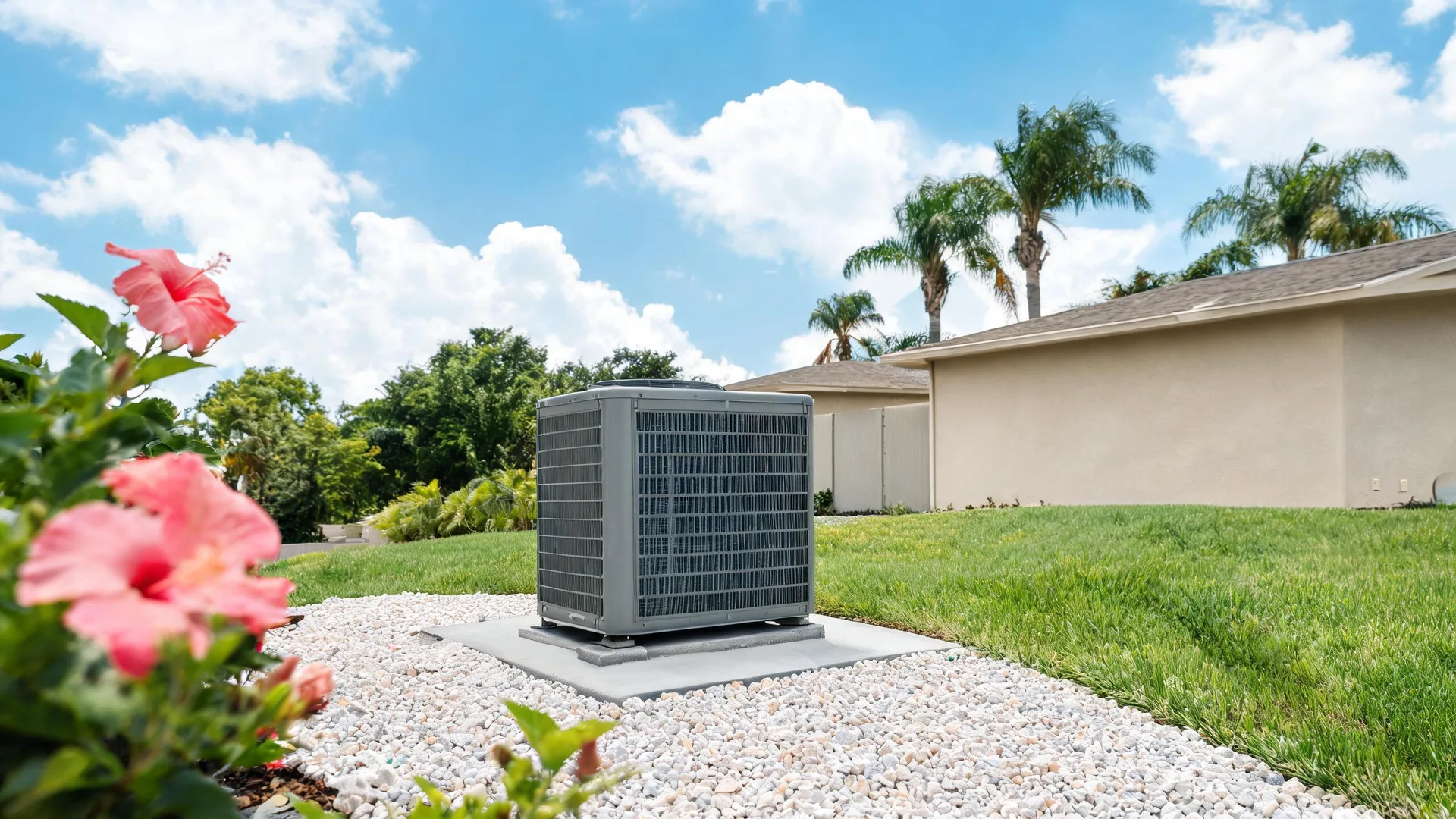
Walk outside and check the condenser. If leaves, grass clippings or a fence are pressed against it, that unit can't shed heat properly. Clear a couple feet around it on every side before you assume the problem is inside.
Estimates for a typical Queens County home, compared with an older unit built to the previous federal minimum, from EIA household energy data, New York fuel prices and NOAA climate normals. Your home will differ.
Repair makes sense when a part like a capacitor or contactor has failed.
Replacement makes sense when the compressor has failed or the system uses R-22 refrigerant, which is no longer made.
A diagnostic starts outside at the condenser, then moves in. A technician checks the capacitor's charge, since a weak one is the most common reason a system won't start or stops mid cycle. Refrigerant gets checked next, with gauges that show not just the charge but whether it's dropping, which points straight to a leak. The coil gets a look for dirt or ice, and the blower gets checked for the airflow it's supposed to move. Each reading rules something out, and whatever doesn't check out clean is the answer.