






Overhead view of a gray residential air conditioning condenser unit mounted on a concrete pad beside a house with asphalt shingle roofing.

AC Repair in Poughkeepsie, NY

Tell us about the job

Takes about a minute. No obligation.

RepairCentral ACDutchess County, NY
Step 1 of 2

What ZIP code is the job in?

A warning sign from your AC is rarely the whole problem, just the part that showed up first. Keep running a unit that's low on refrigerant and the compressor works harder than it was built to, pulling more current and running hotter than it should. Keep running one with a clogged drain line and the water backs up until it overflows the pan, sometimes into the ceiling below it. A failing capacitor puts extra strain on the compressor every time it tries and fails to get the motor started. None of these get better on their own. The part under strain either fails outright or takes the compressor down with it, and the compressor is the one part of the system you want to avoid replacing.

3 months
June through August, your air conditioner is on duty
81°F
the average summer afternoon it cools against
19 hail events
in ten years, and hail bends the fins on outdoor coils
341 wind events
in ten years, and wind drives debris into outdoor units
Isometric cutaway illustration of a house interior showing ducted air handling equipment and duct runs through rooms, connected by piping to an outdoor condenser unit on a pad outside the wall.
Your air conditioner works hardest from July through August.

NOAA nClimDiv, 1991–2020 normals

Poughkeepsie summers run June through August, with afternoon highs averaging 81°F.

Three months of moderate heat each year is a normal workload for an AC, not the kind of strain that wears a system down early.

Half the homes in Dutchess County were built by 1971, and the AC is rarely the original

Half the homes here were built by 1971
Climate zone 5A
Power costs 24.43 cents a kWh statewide
Power here isn't cheap, and a bad AC wastes itNew York homes paid 24.43 cents per kilowatthour in 2024

Before you call anyone, check the simple things first. Go to the thermostat and make sure it's set to cool, with the target temperature below the room temperature, since a setting bumped by accident looks exactly like a dead system. Next check the breaker panel. A tripped breaker is a quick fix, but if it trips again once you reset it, stop and leave it off, because that's the system telling you it's drawing more power than it should. Go outside and look at the outdoor unit. If the fan isn't spinning and you don't hear any hum at all, that's worth telling the contractor before they even arrive. Last, check the filter. A filter packed with dust chokes off airflow, and the unit will ice up or short cycle trying to push air through it. None of this tells you what's actually wrong, but it rules out the easy stuff and gives whoever comes out a clearer starting point.

Get the usual fix

Nothing about this area is especially hard on it. It's most likely the usual problem with the usual fix.

Find a contractor
A gray cylindrical air conditioning condenser unit mounted on a concrete pad next to a light-colored vinyl-sided house exterior.

One visit, a short list of things that actually fail

A diagnostic visit starts outside, not on the phone. A tech wants the system running when they get there, or wants to know why it isn't, so they can see it fail instead of just hearing about it secondhand. They check the pressures first, high side and low side, because that tells them whether they're dealing with a refrigerant problem, an airflow problem, or an electrical one. They'll pull the capacitor and test it, since a weak one still looks fine sitting in the unit but won't hold its charge under a meter. They'll check the contactor for pitting, run the amp draw on the compressor and the fan motor, and look at the coil for the kind of buildup that cuts off airflow. None of this is guesswork. Each reading rules something out or points at something specific, and by the time they're done, the failing part usually isn't in question anymore, just what it takes to fix it.

What you'll actually notice first

The air coming out of the vents turns warm, or weak, or stops matching the thermostat setting. The outdoor unit hums without the fan turning, or clicks as it tries to start and fails. A hissing sound near the indoor unit can mean refrigerant escaping from a line. Water around the indoor unit means the drain line or pan has already backed up. Ice on the outdoor unit or the refrigerant lines means airflow or refrigerant is already low.

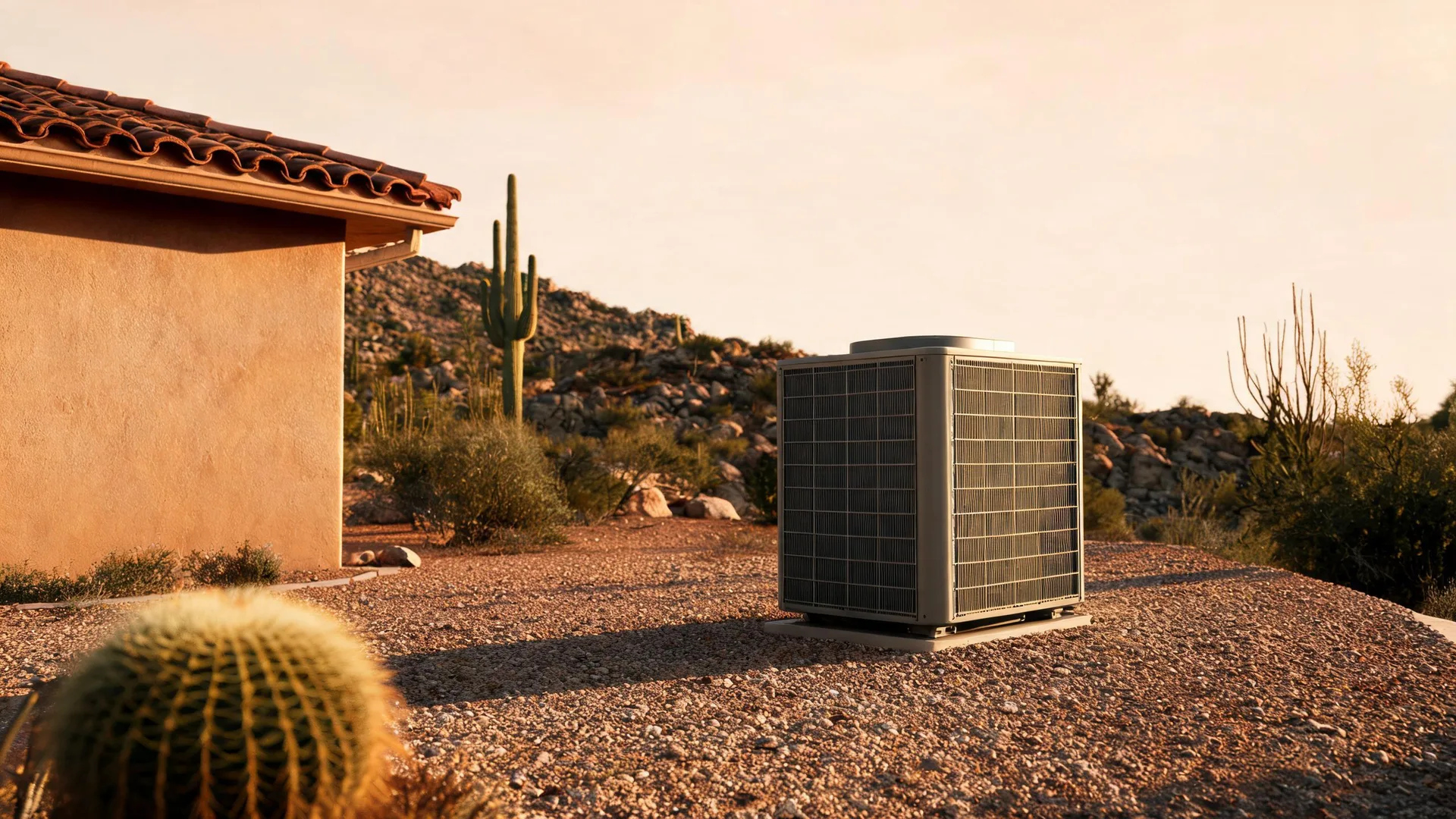
What it means for getting it fixed

A system that short cycles, turning on and off in quick bursts, is already under strain and needs attention soon, not whenever it's convenient. A unit that still cools but weakly can usually wait for a scheduled visit. One that trips its breaker on every reset, or puts off a burning smell, needs to stay off until someone looks at it. The sound or sign that got your attention tells a tech where to start, even if it isn't the whole story.

Overhead view of an outdoor AC condenser unit on a concrete pad next to a house with a dark shingle roof.

A new air conditioner would save little on running costs in Dutchess County, so the repair decision comes down to the unit's condition.

  • A new one at the federal minimum, 13.4 SEER2$230 a year
  • An older air conditioner$240 a year

Estimates for a typical Dutchess County home, compared with an older unit built to the previous federal minimum, from EIA household energy data, New York fuel prices and NOAA climate normals. Your home will differ.

Repair makes sense when a part like a capacitor or contactor has failed.

Replacement makes sense when the compressor has failed or the system uses R-22 refrigerant, which is no longer made.

At some point a tech is going to tell you the repair costs real money, and you'll wonder if it's worth it on an old system. Age matters less than what's already failed. A unit that's needed several service calls in close succession is one where the next part is probably close behind, because the strain that took out the first part doesn't go away on its own. A compressor replacement is the one that usually settles the question. The compressor costs more than most people want to put into a system that's already old, and putting that money toward a new one usually makes more sense than saving one that's past it. A capacitor, a contactor, a blown fan motor, those are worth fixing almost every time, on a unit of any age. The real question isn't how old the system is. It's whether the part that failed is one that takes the rest of the system down with it.