





A row of illuminated white colonial houses with black shutters and a stone wall along a road at dusk.

AC Repair in Niagara Falls, NY

Tell us about the job

Takes about a minute. No obligation.

RepairCentral ACNiagara County, NY
Step 1 of 2

What ZIP code is the job in?

Cooling only runs two months here, July and August. That short a season doesn't give a weak part much chance to show itself before it fails outright. A capacitor or a contactor that limped along last summer sits unused the rest of the year, and it doesn't get better on its own. June is the month to get it checked, before the first real hot stretch puts load on it. Once August ends you likely won't notice a problem again until next July, by which point it may have gotten worse.

2 months
July through August, your air conditioner is on duty
79°F
the average summer afternoon it cools against
17 hail events
in ten years, and hail bends the fins on outdoor coils
87 wind events
in ten years, and wind drives debris into outdoor units
Isometric grayscale illustration of a cutaway house with the roof lifted, showing interior rooms, ductwork, an indoor air handler, and an outdoor condenser unit beside the building.
Your air conditioner works hardest from July through August.

NOAA nClimDiv, 1991–2020 normals

Two months of real cooling a year, July and August, is a short season to wear out a compressor.

Most of what's wrong with your AC is age or a part that quit, not a system worn down from overuse.

Half the homes in Niagara County were built by 1958, old enough that the AC itself is probably not original

Half the homes here were built by 1958
Cooling runs July through August
Summer afternoons average 79°F

New York homes paid 24.43 cents per kilowatthour in 2024, well above what most of the country pays. A struggling AC doesn't fail quietly. A weak capacitor makes the compressor work harder to start. A dirty coil makes the whole system run longer to reach the temperature you set. Either way you're paying more for less cooling, every day it keeps running like that. At that rate, a repair that waits is a repair you're also paying rent on.

Two months of summer means most problems are fixable

Your AC only has to get through July and August here. If it's acting up now, that points to a worn part, not a system run into the ground. That's usually worth fixing.

Find a contractor
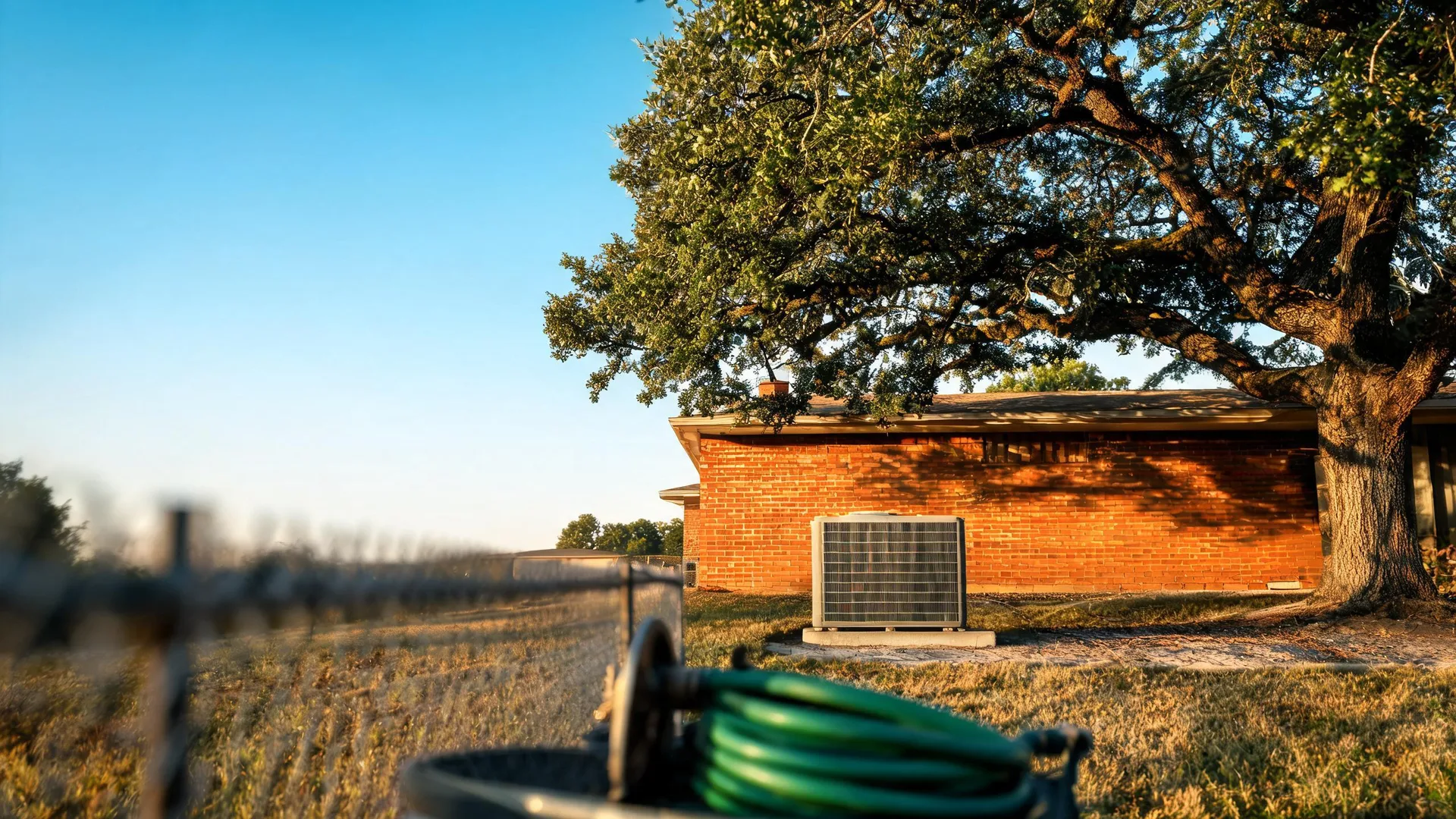
A gray residential air conditioner condenser unit mounted on a concrete pad in an open grass field.

Ask what the repair is buying you

If your AC came with a house built that long ago, ask the contractor one question before any repair gets approved. How much life is left in it. A compressor nearing the end doesn't owe you a rebuilt capacitor or a new coil. Some repairs are worth doing on old equipment. Others just delay the same decision a year.

What to check before you call

Check that the thermostat is set to cool and set below room temperature, and that it has fresh batteries if it uses them. Look at the breaker panel for a tripped breaker on the AC circuit. Check the outdoor unit for a shut-off switch or a pulled disconnect nearby, and make sure nothing is blocking the airflow around it. Pull the filter and hold it up to light. If you can't see light through it, that's enough to choke airflow and should be swapped before anyone comes out.

What a homeowner shouldn't touch

Don't take the cabinet off the outdoor unit or the indoor air handler. The capacitor inside can hold a charge even with the power off, and the coils and wiring aren't something to test by hand. If the outdoor unit is frozen over, turn the system off and let it thaw rather than chipping at the ice. Adding refrigerant isn't a homeowner job either. It takes gauges to know what's actually low, and a system that's low almost always has a leak that needs finding first.

Overhead view of an air conditioning condenser unit on a concrete pad next to a house with asphalt shingle roofing and vinyl siding.

A new air conditioner would save little on running costs in Niagara County, so the repair decision comes down to the unit's condition.

  • A new one at the federal minimum, 13.4 SEER2$210 a year
  • An older air conditioner$230 a year

Estimates for a typical Niagara County home, compared with an older unit built to the previous federal minimum, from EIA household energy data, New York fuel prices and NOAA climate normals. Your home will differ.

Repair makes sense when a part like a capacitor or contactor has failed.

Replacement makes sense when the compressor has failed or the system uses R-22 refrigerant, which is no longer made.

A diagnostic visit starts with the complaint, not the unit. A contractor wants to know what you noticed first, whether it's warm air, no air, a smell, a noise, and when it started. From there it's gauges and a meter, not guesswork. Checking refrigerant pressure shows whether the charge is right or whether there's a leak behind the symptom. A clamp meter on the compressor and fan motor shows whether they're drawing the current they should, which points to a failing part before it fails completely. The capacitor gets tested under load, since one can read fine sitting still and still be too weak to start the compressor. Airflow gets checked at the vents and across the indoor coil, because a system can have good refrigerant and a good compressor and still cool poorly if air isn't moving through it. What gets found determines what gets proposed, and a straight answer on what's actually wrong is worth as much as the repair itself.