




A row of similar small gray single-story houses with gabled roofs and porches behind a white picket fence, with mown grass in the foreground and large deciduous trees behind.

AC Repair in Newark, NY

Tell us about the job

Takes about a minute. No obligation.

RepairCentral ACWayne County, NY
Step 1 of 2

What ZIP code is the job in?

Your AC in Newark gets a short season here, July and August mostly, with afternoon highs around 79 degrees. That is not a lot of hard running compared to what units in hotter states deal with. So when something goes wrong, it is rarely because the system has been worked to death. More often it is a part that wore out on its own schedule, or something that got missed on upkeep. That is worth knowing before you decide whether to fix it, because a machine that has had an easy life is usually a machine worth fixing rather than replacing.

2 months
July through August, your air conditioner is on duty
79°F
the average summer afternoon it cools against
5 hail events
in ten years, and hail bends the fins on outdoor coils
105 wind events
in ten years, and wind drives debris into outdoor units
Isometric grey illustration of a cutaway single-story house showing interior rooms, ceiling ductwork connected to an indoor air handler, and an outdoor condenser unit linked by lines outside the wall.
Your air conditioner works hardest from July through August.

NOAA nClimDiv, 1991–2020 normals

Cooling in Newark only runs July and August.

The first hot stretch in July is when a weak part gets found.

Half the homes here were built by 1968, old enough that the AC may be on its last stretch

Half the homes here were built by 1968
Cooling runs July through August
Summer afternoons average 79°F

Electricity here runs 24.43 cents per kilowatt-hour, on the high side for New York. That changes the math on repair a little, but not which part is likely at fault. A system that is short on refrigerant or running a weak capacitor works harder than it should, and at this rate the difference shows up on the bill fast. Worth asking whoever comes out to check the charge and the capacitor while they are in there, not just whatever stopped it from running. Fixing the real cause instead of the symptom matters more here than in a state with cheap power, because a unit that runs inefficiently costs you for every hour it limps along.

An easy life like this one is usually worth fixing

A system that has only had to work two months a year, and not even hard work at 79 degrees, usually has more life left in it than a quick look suggests. Get the actual cause checked before you write it off.

Find a contractor
A gray metal air conditioning condenser unit mounted on a concrete pad in a flat grassy field under a partly cloudy sky.

Ask the age before you approve the repair

If the AC outside is the one the house came with, ask whoever comes out to look how old it actually is before you approve a repair. The question isn't only what broke this time. It's whether the unit has much life left in it at all, or whether the next part to fail is just a matter of time. That's a fair question to put to the contractor directly, and the answer should factor into whether you pay for the fix or start pricing a replacement instead.

Check the thermostat and the breaker first

Set the thermostat below room temperature and listen for the outdoor unit to kick on. If nothing happens anywhere, check the breaker panel and any shutoff switch near the indoor unit before assuming the worst. A tripped breaker or a thermostat with dead batteries looks exactly like a dead system from the inside.

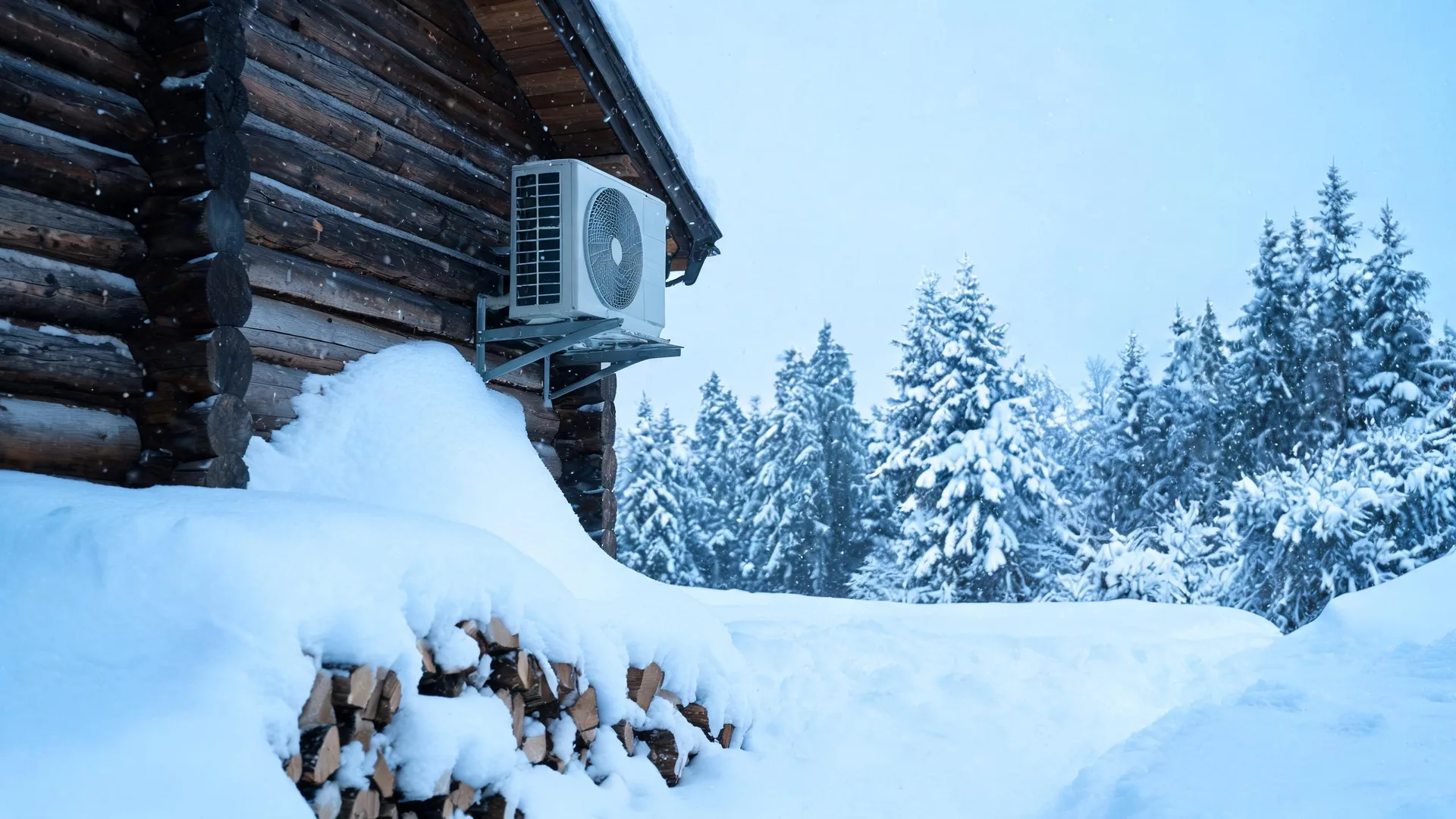
Look at the filter and the outdoor unit

Pull the filter and hold it up to light. If you can't see through it, that alone can starve the system of airflow and cause ice to form on the coil. Then walk outside and look at the condenser. Leaves, grass clippings or a fence panel pressed too close block airflow the same way a dirty filter does, and clearing the space around it is something you can do yourself.

An outdoor air conditioning condenser unit positioned beside a blue-sided house at sunset.

A new air conditioner would save little on running costs in Wayne County, so the repair decision comes down to the unit's condition.

  • A new one at the federal minimum, 13.4 SEER2$190 a year
  • An older air conditioner$200 a year

Estimates for a typical Wayne County home, compared with an older unit built to the previous federal minimum, from EIA household energy data, New York fuel prices and NOAA climate normals. Your home will differ.

Repair makes sense when a part like a capacitor or contactor has failed.

Replacement makes sense when the compressor has failed or the system uses R-22 refrigerant, which is no longer made.

The compressor is the part that decides most of these calls. It sits in the cabinet and costs more than anything else out there, so if a tech finds it grounded out or seized, that is usually the end of the conversation no matter what else checks out fine. Short of that, most failures are smaller and worth fixing on their own terms. A weakened capacitor, a contactor with pitted points, a fan motor that has started to bind. None of that says anything about the rest of the unit. Those parts fail on their own schedule and get replaced on their own, while the compressor and the coil keep going. What actually failed matters more than how old the failure is. A unit can be old and still have a healthy compressor and a clean coil, and in that case you are paying for a part, not buying time on a system that is already on its way out.