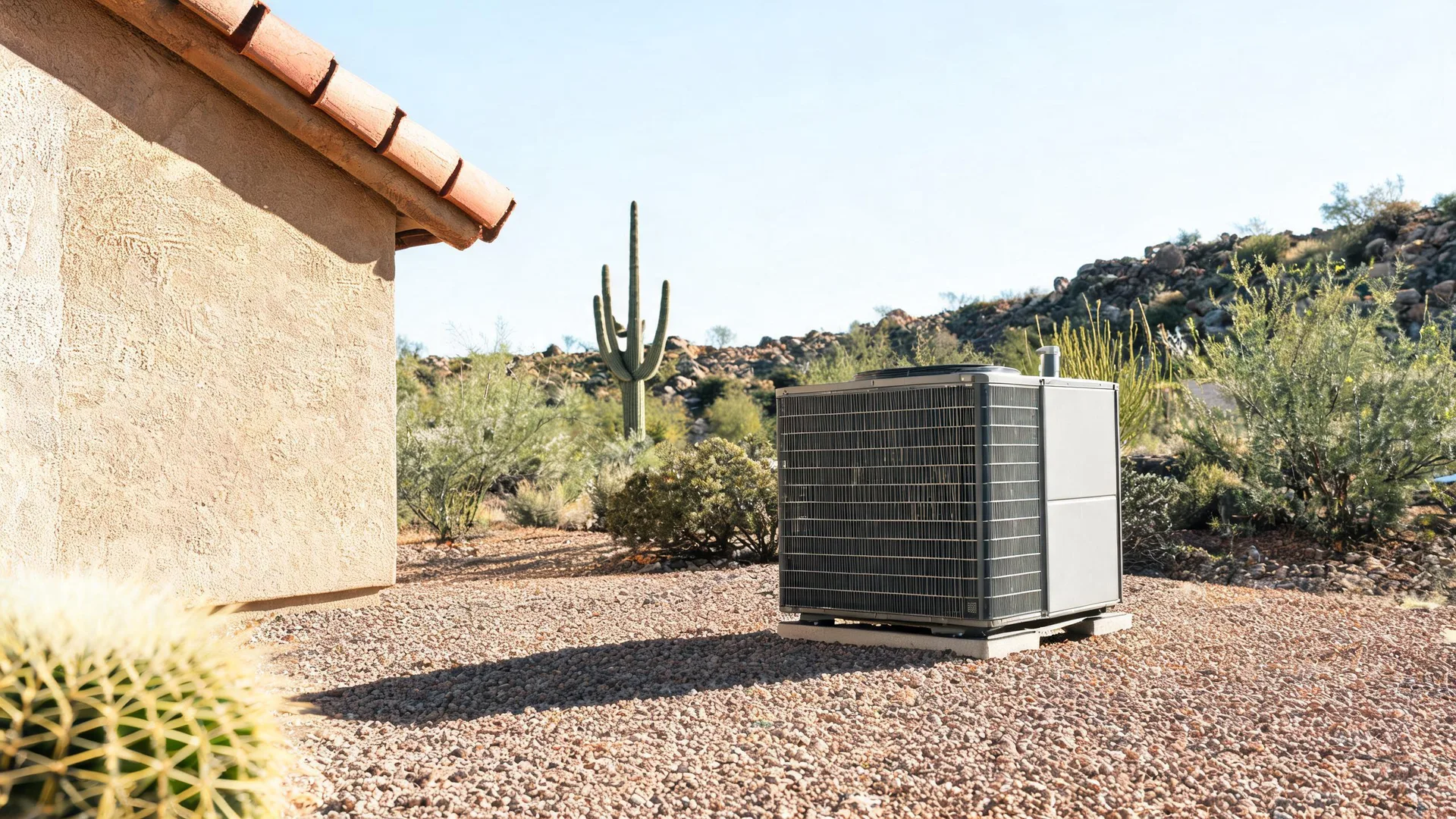
July is when weak parts fail
Cooling in Sullivan County only runs from July through August. A capacitor or contactor that was barely getting by last August has sat unused since, and the first hot week in July is what finally tells on it.

Takes about a minute. No obligation.
Cooling in Sullivan County only runs from July through August. A capacitor or contactor that was barely getting by last August has sat unused since, and the first hot week in July is what finally tells on it.
With a two month season, a unit that is struggling in July will not get better on its own. Waiting means fewer cool days out of a short season, and a small problem that gets worse under continued load.

NOAA nClimDiv, 1991–2020 normals
Summers here only ask an air conditioner to work about two months a year, July and August, with afternoon highs averaging 78.
A unit that runs that little rarely wears out, so if yours is struggling now, something specific is wrong and fixing it is usually worth doing.



Half the homes in Sullivan County were built in 1974 or earlier, and half in 1974 or later. That split doesn't point to any one cause here. An AC problem in an older house and one in a newer house usually comes down to the same handful of parts. A capacitor, a contactor, a low charge, a dirty coil. The age of the house next door tells you nothing about what's wrong with yours. What matters is getting the actual part checked, not guessing based on when the place was built.
Problems tend to show up in the first weeks of the season, when the load hits a part that was already weak.
Find a contractorA two month season doesn't give a unit much chance to wear out on its own, so a repair now is more likely to fix the real problem than to just delay a bigger one. Get the actual part checked, the capacitor, the contactor, the charge, rather than guessing or waiting to see if it gets worse. With July and August being the only months that matter, there's little to gain by putting it off.
When a capacitor is going bad, the compressor has to fight to start every time the system cycles on. That extra draw heats up the windings and stresses the contactor. Keep running it like that and a capacitor swap can turn into a compressor that won't start at all.
A refrigerant leak doesn't seal itself. Every hour the system runs low on charge, the compressor works harder and the coil is more likely to ice over. Once ice forms on the coil, airflow drops further and the compressor runs even hotter. Shutting it off for a while lets the ice melt, but the leak is still there when you turn it back on.
Estimates for a typical Sullivan County home, compared with an older unit built to the previous federal minimum, from EIA household energy data, New York fuel prices and NOAA climate normals. Your home will differ.
Repair makes sense when a part like a capacitor or contactor has failed.
Replacement makes sense when the compressor has failed or the system uses R-22 refrigerant, which is no longer made.
A diagnostic starts outside at the condenser, with gauges on the lines to check the charge and a meter on the capacitor and contactor. A tech will also look at the compressor amp draw against what it should be pulling, since a motor fighting to start shows up there before it shows up anywhere else. Inside, the coil gets checked for ice or buildup and the blower for airflow, since a weak signal at the thermostat can look like a refrigerant problem when it isn't one. Most of this gets answered in the first few readings. The rest is confirming which part is actually failing before anything gets replaced.