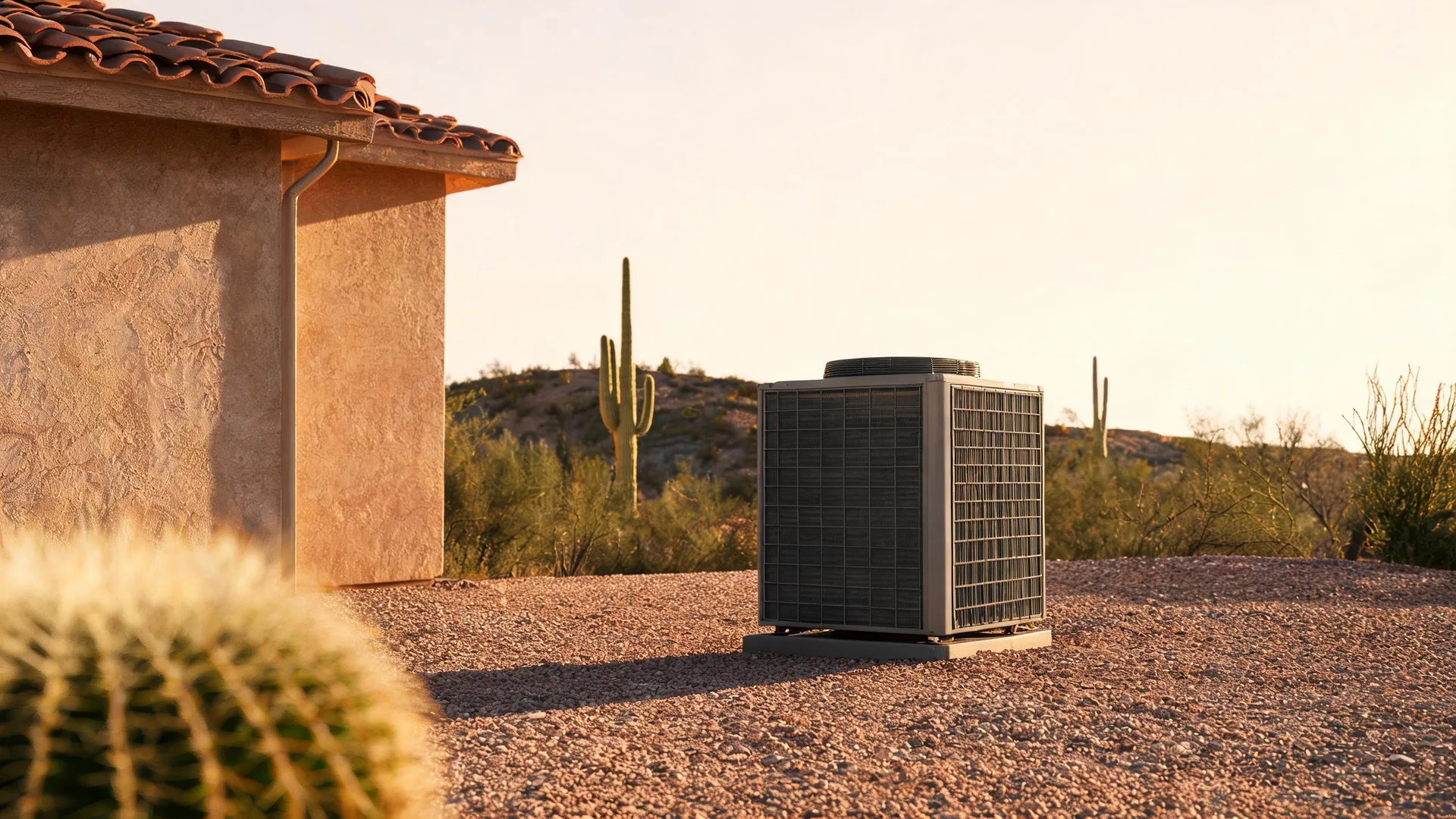
A warm compressor is a quiet compressor
A compressor that's low on charge or struggling to start runs hotter than it should. Keep it running and that heat has nowhere to go, so the windings degrade faster and a repair can turn into a replacement.
Takes about a minute. No obligation.
Cooling only runs two months here, July and August, so a system that was already weak tends to fail right when it gets switched on. June is the month it sits unused. Then it gets asked to run hard with no warm-up, and whatever was marginal last summer shows up again fast. A capacitor that was starting to go, a low charge that was borderline, a contactor with some wear on it. None of that gets better sitting idle all spring. If your AC is acting up now, it's worth having someone find the actual cause rather than just getting it running again, since the same weak part will likely fail again next July if it's not replaced.
NOAA nClimDiv, 1991–2020 normals
Afternoon highs here average 77°F across June, July and August, a mild ask compared to what AC units handle in hotter regions.
A system that only has to fight mild heat wears slower, so when something fails, it's usually one weak part, not a machine on its way out.




St. Lawrence County sees its share of rough weather, with damaging wind and winter storms on record going back to 2015. None of that is what's hard on your AC. An outdoor unit is built to sit outside through wind and snow and ice, all year, every year. What wears out a compressor or a capacitor is running hours, not weather, and your system only logs two months of those a year. So if it's struggling now, look at the unit itself first, not the summer it's had. A storm didn't do this. A part did.
One weak part is the usual reason an AC acts up here, and that's a repair worth making. Get the cause found and fixed before the next stretch of hot days asks more of it.
Find a contractor
If your AC came with the house, it's worth asking how old that makes it. A system installed decades ago has already done most of what it's going to do. Ask the contractor straight out how much life is left in it before paying for another repair.
A compressor that's low on charge or struggling to start runs hotter than it should. Keep it running and that heat has nowhere to go, so the windings degrade faster and a repair can turn into a replacement.
An AC that trips its breaker repeatedly is drawing more current than it should, often from a failing capacitor or a motor that's binding. Resetting it and letting it run again just repeats the strain that tripped it the first time.
Estimates for a typical St. Lawrence County home, compared with an older unit built to the previous federal minimum, from EIA household energy data, New York fuel prices and NOAA climate normals. Your home will differ.
Repair makes sense when a part like a capacitor or contactor has failed.
Replacement makes sense when the compressor has failed or the system uses R-22 refrigerant, which is no longer made.
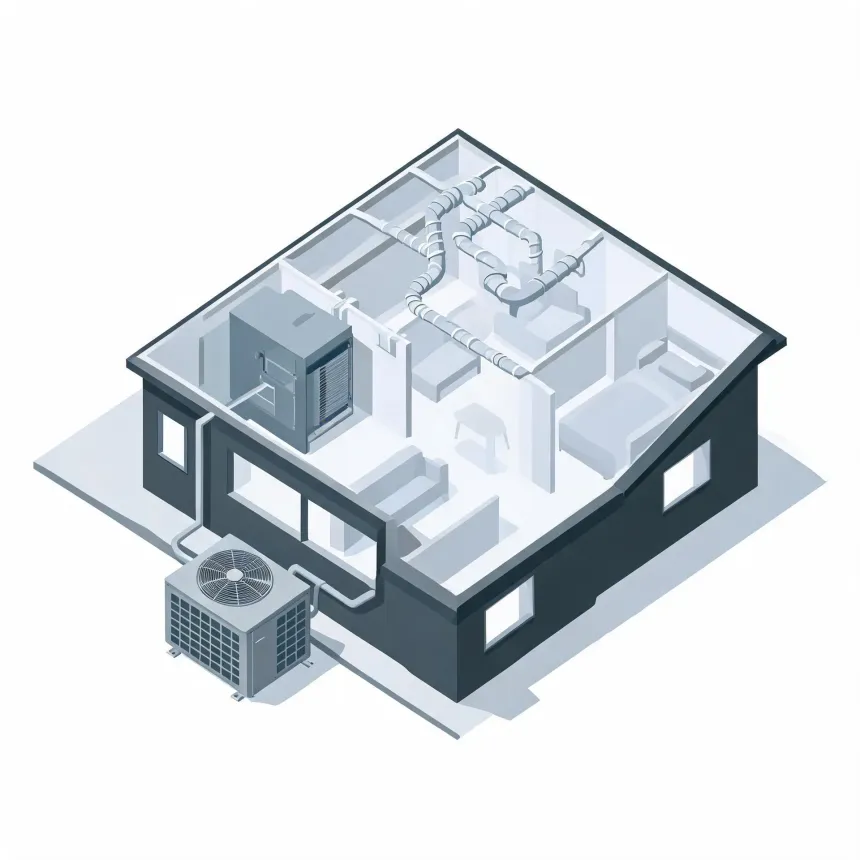
A diagnostic starts outside at the unit itself. The tech checks the capacitor first, since a weak one is behind a lot of no-cool calls and it's quick to test. From there it's the contactor, the wiring, and the refrigerant charge, checked with gauges rather than guessed at. Inside, the tech looks at the evaporator coil and the airflow across it, since a coil that's iced over or starved for air can look like several other problems at once. None of this gets fixed on a hunch. Once the actual cause is found, you get told what it is and what it takes to fix it, not just that it's running again for now.