





A row of illuminated white colonial houses photographed at twilight along a tree-lined road with a stone wall in the foreground.

AC Repair in Manhattan, NY

Tell us about the job

Takes about a minute. No obligation.

RepairCentral ACNew York County, NY
Step 1 of 2

What ZIP code is the job in?

Before you call anyone, check the thermostat batteries and make sure it's set to cool, not just on. Go outside and look at the condenser. If the fan isn't spinning and you hear a hum, that's a different problem than if it's dead silent. Check your breaker panel too, a tripped breaker will keep the whole system down even if the thermostat looks fine. Inside, pull the filter and hold it up to a light. If you can't see light through it, that's choking the airflow and can make the coil freeze over. Look at the vents while you're at it, closed or blocked registers make a system work harder than it should.

4 months
June through September, your air conditioner is on duty
84°F
the average summer afternoon it cools against
4 hail events
in ten years, and hail bends the fins on outdoor coils
32 wind events
in ten years, and wind drives debris into outdoor units
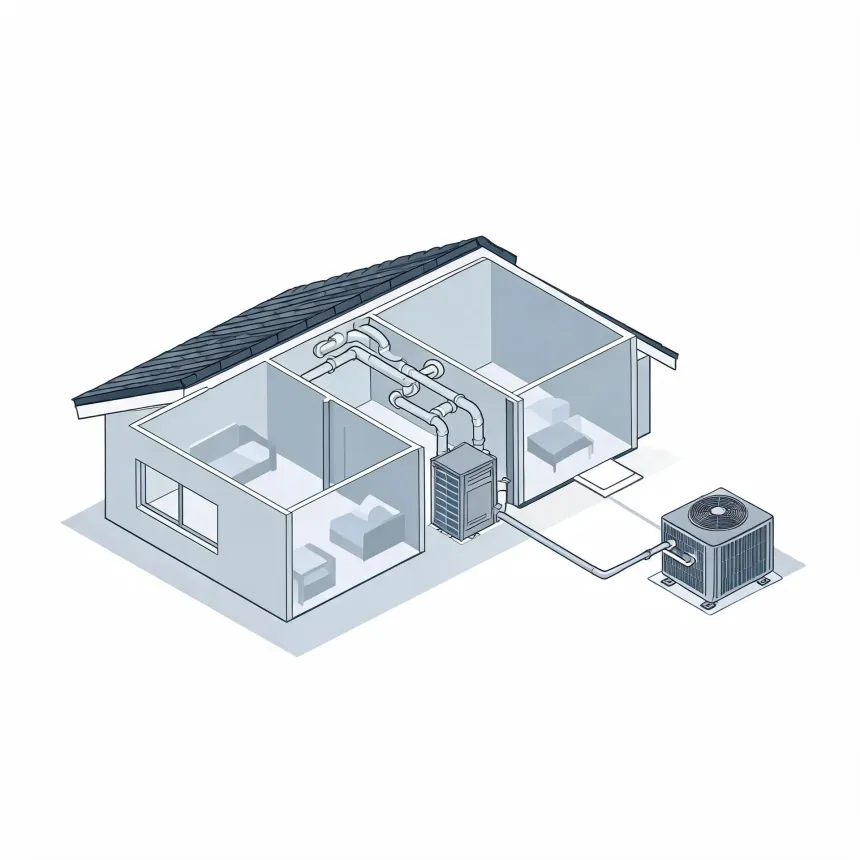
Isometric line illustration of a cutaway single-story house showing interior rooms, ductwork, an indoor air handler or furnace, and a refrigerant line running to an outdoor condenser unit on a pad.
Your air conditioner works hardest from June through August.

NOAA nClimDiv, 1991–2020 normals

A weak capacitor won't start the compressor on a hot day, it just hums or trips the breaker.

Catching a bad capacitor early is a quick part swap, not a compressor replacement.

Half the homes here were built by 1951, and the AC inside is often just as old

Half the homes here were built by 1951
Cooling runs June through September
Summer afternoons average 84°F

Electricity in New York runs 24.43 cents per kilowatthour, well above what most of the country pays. An air conditioner working harder than it should, because of a dirty filter, a low charge, or a capacitor on its way out, burns through that power every hour it runs. You won't see it as a repair bill. You'll see it on the meter, month after month, for as long as the problem sits there.

At 24.43 cents a kilowatt-hour, a struggling AC is an expensive thing to leave alone

Get the cause found and fixed, whether that's a capacitor, a low charge, or something simpler, and the meter stops paying for it.

Find a contractor
A man in a cap, dark shirt and tan work pants, seen from behind, carries a worn duffel bag as he climbs steps toward a dark green front door beside a potted shrub.
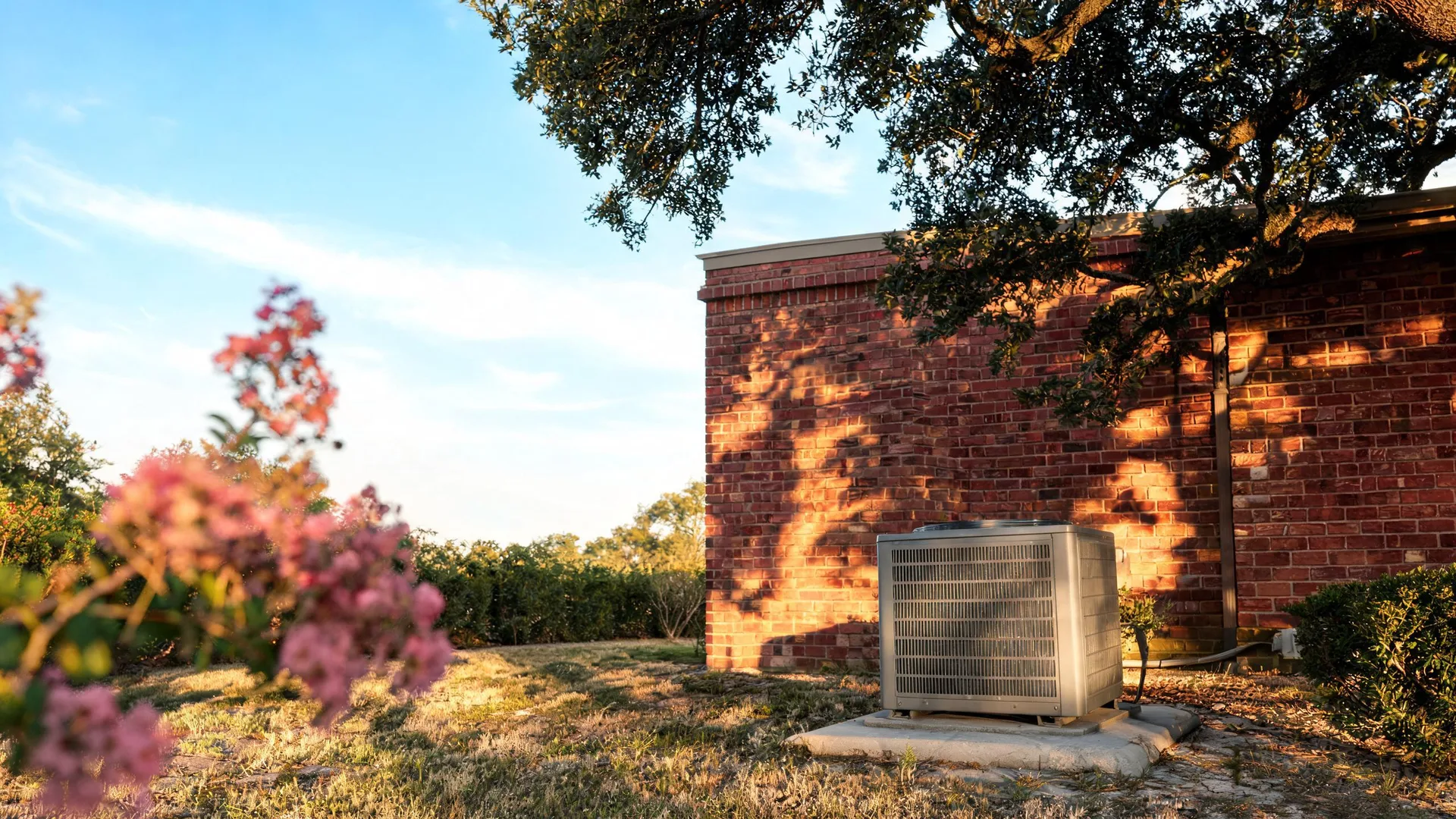
An outdoor air conditioning condenser unit mounted on a concrete pad surrounded by gravel, photographed against a partly cloudy blue sky.

What's actually wearing out

A compressor is the part that decides whether a repair makes sense. It sits outside doing the hard work of the whole system, and it's not something a tech can inspect by eye the way they can a capacitor or a contactor. They'll run it, listen to it, and check what it's drawing against what it should draw. A compressor on its way out sounds different, often a deep rumble or a hard knock, and it may trip on its own overload protection after running a few minutes. If the compressor is still sound, most other repairs are worth doing. Capacitors, contactors, fan motors and low charges get fixed on their own terms. If the compressor itself is failing, that changes the math, because a compressor swap on an older system often costs close to what a new system would.

Warm air from the vents

If the air coming out barely feels cool, or feels no different from room air, the system is running but not doing its job. That can mean a refrigerant leak, a failing compressor, or a coil so frozen or dirty it can't pull heat out of the air anymore. It's rarely something to wait on, since a low charge gets worse and a struggling compressor can fail outright.

Noise that wasn't there before

A grinding or screeching sound points to a motor bearing wearing out. A clicking that repeats without the system starting usually means the capacitor or the relay isn't doing its job. A new noise is the system telling you something specific is wrong, and the longer it runs that way, the more likely that one part takes others down with it.

An outdoor air conditioning condenser unit on a concrete pad next to the gray vinyl siding of a residential home.

A new air conditioner would cut about $30 a year off cooling for a typical New York County home.

  • A new one at the federal minimum, 13.4 SEER2$420 a year
  • An older air conditioner$450 a year

Estimates for a typical New York County home, compared with an older unit built to the previous federal minimum, from EIA household energy data, New York fuel prices and NOAA climate normals. Your home will differ.

Repair makes sense when a part like a capacitor or contactor has failed.

Replacement makes sense when the compressor has failed or the system uses R-22 refrigerant, which is no longer made.

A diagnostic visit starts outside at the condenser and inside at the air handler, with a tech checking both before touching anything. Gauges go on the lines to read the refrigerant charge, since too little points to a leak and too much points to a bad charge from an earlier job. The capacitor and contactor get tested under load, not just looked at, because a capacitor can read fine sitting still and still fail to kick the compressor on. Electrical connections get checked for corrosion or a loose lug, since a connection that's heating up will eventually burn through. The tech will also pull the blower wheel and coil if airflow seems off, looking for dirt buildup that's choking the system from the inside. By the end you should hear what's actually wrong, not a guess, and what it takes to fix it.