






A two-story red brick house with black shutters, a dark roof and a chimney stands on a mown lawn behind a dry stone wall, framed by large spreading deciduous trees under an overcast sky.

AC Repair in Kiryas Joel, NY

Tell us about the job

Takes about a minute. No obligation.

RepairCentral ACOrange County, NY
Step 1 of 2

What ZIP code is the job in?

Your AC only has to carry the load for about three months here, June through August. Afternoons average 81 degrees, which is warm but not the kind of heat that pushes a system to its limit day after day. A unit working under that kind of demand usually doesn't wear out early. So if yours is acting up, the cause is more likely age, a part that failed on its own, or something that got missed at a service call, not the system being run into the ground. That's worth knowing before you decide whether a repair makes sense.

3 months
June through August, your air conditioner is on duty
81°F
the average summer afternoon it cools against
9 hail events
in ten years, and hail bends the fins on outdoor coils
155 wind events
in ten years, and wind drives debris into outdoor units
Isometric grayscale illustration of a cutaway house with the roof lifted, showing interior rooms, ductwork, an indoor air handler, and an outdoor condenser unit beside the building.
Your air conditioner works hardest from July through August.

NOAA nClimDiv, 1991–2020 normals

June is when cooling starts here, and the first hot stretch is when a weak part finally gives out.

If your AC is struggling now, get it looked at before August, not after.

Electricity here runs 24.43 cents a kilowatt-hour, so a struggling AC costs you more every month it's not fixed

Power costs 24.43 cents a kWh statewide
Cooling runs June through August
Summer afternoons average 81°F

A system that's short cycling, low on charge, or struggling to hit the temperature you set still pulls power the whole time it runs. That doesn't go away because the problem hasn't been found yet. At New York's electric rates, a few more weeks of that is a few more weeks on every bill between now and when the heat breaks. Getting a tech out to find the actual cause, whether that's a failing capacitor, a dirty coil, or a slow leak, stops the bleeding faster than waiting it out.

The house's age isn't the clue here, the unit is

Half the homes in Orange County were built in 1975 or earlier, half after. Either way, that's not what decides this. A capacitor fails or a coil gets dirty the same way in an old house and a new one. The house's age doesn't point to the cause, so a tech still has to check the actual unit to find it.

Find a contractor
A man in a dark long-sleeve shirt and tan work pants, seen from behind, carries a canvas tool bag up porch steps toward a dark green front door beside a potted shrub.
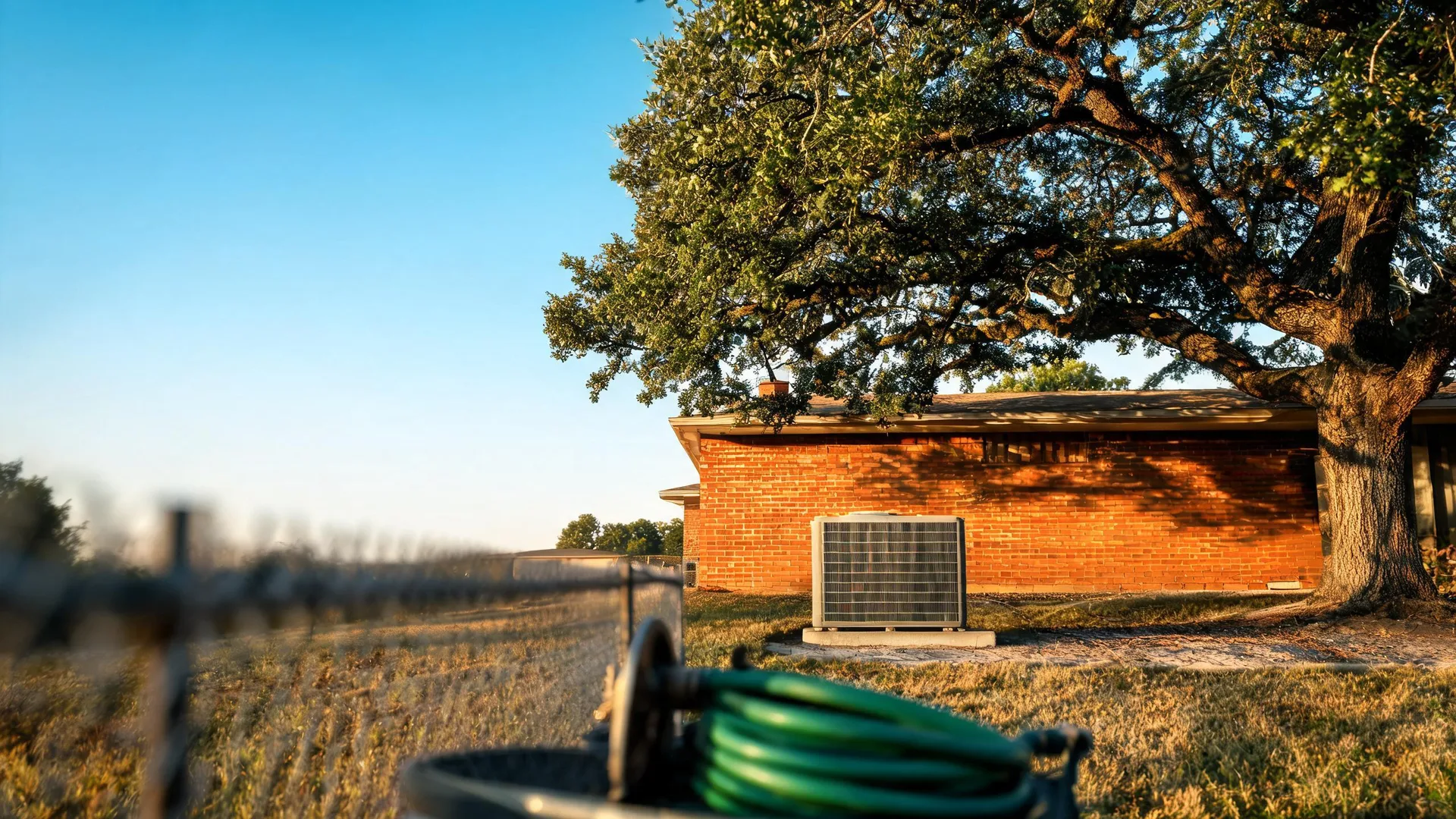
A gray residential air conditioner condenser unit mounted on a concrete pad in an open grass field.

One failed part or a system on its way out

A repair is worth doing when the rest of the system is sound. The compressor turns on and runs steady once it gets good power. The coils are clean. The charge is right. Replace the one part that failed and it goes back to doing its job. What changes the math is a compressor that's already been struggling, running hot or drawing too much current for a while before it finally quit. At that point the compressor itself may be the next thing to go. Putting money into a capacitor or a contactor ahead of it doesn't buy you much. A tech can tell you which situation you're in by how the compressor behaves once the immediate problem is fixed, not just whether it starts.

A weak capacitor doesn't just fail, it drags the compressor down with it

When a capacitor can't deliver the jolt the compressor needs to start, the motor still tries. It draws more current than it should on every attempt. Run that for days instead of hours and you've worn down a motor that was fine on its own.

A small refrigerant leak stays small, until the compressor runs dry

Low charge makes a system work harder to hit the same temperature, so it runs longer and pulls more heat through the coil than it was built for. Keep running it that way and the compressor can overheat or seize, turning a leak you could patch into a compressor you have to replace.

Overhead view of an air conditioning condenser unit on a concrete pad next to a house with asphalt shingle roofing and vinyl siding.

A new air conditioner would save little on running costs in Orange County, so the repair decision comes down to the unit's condition.

  • A new one at the federal minimum, 13.4 SEER2$220 a year
  • An older air conditioner$240 a year

Estimates for a typical Orange County home, compared with an older unit built to the previous federal minimum, from EIA household energy data, New York fuel prices and NOAA climate normals. Your home will differ.

Repair makes sense when a part like a capacitor or contactor has failed.

Replacement makes sense when the compressor has failed or the system uses R-22 refrigerant, which is no longer made.

A diagnostic call starts with questions. When it stopped cooling, what it was doing right before, whether you heard anything unusual. Then the tech checks the easy things first. The thermostat setting, the air filter, whether the outdoor unit is even running. From there it's gauges on the refrigerant lines to check the charge, a meter on the capacitor to see if it's still holding its rating, and a look at the coils to see if either one is caked in dirt or frozen over. Electrical connections get checked too, since a loose wire can mimic a failing part and send you chasing the wrong fix. By the end you should know which part failed and why, not just that the system isn't cooling.