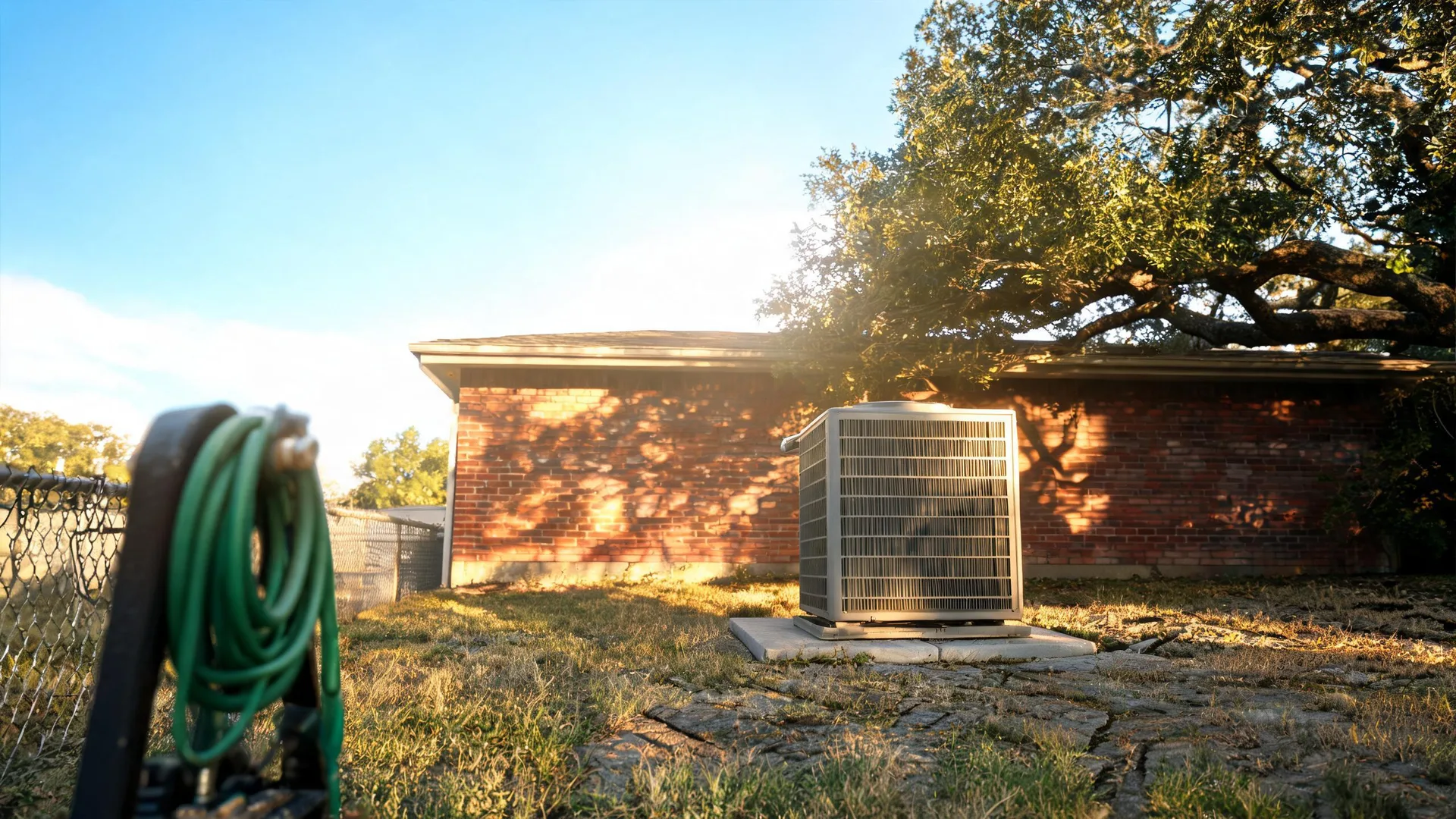
Two months of real work a year
Your AC in Ithaca only has to earn its keep in July and August, with afternoons averaging around 78 degrees. That is a short, mild season compared to what air conditioners deal with further south.

Takes about a minute. No obligation.
Your AC in Ithaca only has to earn its keep in July and August, with afternoons averaging around 78 degrees. That is a short, mild season compared to what air conditioners deal with further south.
A compressor or capacitor that's failing here hasn't been worn down by months of hard running. When something breaks, it's more likely a part reaching the end of its life or an issue that was never caught, which means a repair is often the right call rather than a sign the whole system is spent.

NOAA nClimDiv, 1991–2020 normals
June is quiet here, the last month before your AC has to work in July.
A weak capacitor or low charge usually shows up in the first hot days of July, not before.



About half the homes in Tompkins County were built in 1974 or earlier, and half in 1974 or later. That split doesn't point to any one kind of trouble. An AC installed in an older house isn't working against the house itself, and a newer house isn't protected from the same wear every system gets. What decides whether a repair makes sense is the equipment, not when the walls went up. If your system came with the house, that's worth knowing for its age, but the house's age by itself tells a tech nothing about what's wrong with the unit outside.
Your AC only runs hard in July and August here. A system that's kept up with that is worth fixing when something gives out. Get the part diagnosed before you write off the unit.
Find a contractor
Most AC failures start with the capacitor or the contactor, the parts that get the compressor and fan motor going each time the system cycles on. Every start puts a small jolt through them, and over years that adds up until the capacitor can't hold its charge or the contactor's points wear down. A dirty condenser coil outside makes the whole system work harder to shed heat, and that extra strain shortens the life of whatever is already weakest. Refrigerant doesn't get used up, so a system low on charge has a leak somewhere, usually at a fitting or coil. None of this is about one bad day of heat. It's wear that shows up the next time the system has to work.
A compressor working against a low charge or a dirty coil draws more current to do the same job. Left running, it builds heat it can't shed, and that heat is what takes out a compressor for good. Shutting it off and getting the actual problem found is what stops that from happening.
A failing capacitor makes the compressor draw hard every time it tries to start. That extra draw is what burns out a motor winding or trips a breaker for good. The capacitor itself is a simple part to replace. Waiting on it risks the compressor, which isn't.
Estimates for a typical Tompkins County home, compared with an older unit built to the previous federal minimum, from EIA household energy data, New York fuel prices and NOAA climate normals. Your home will differ.
Repair makes sense when a part like a capacitor or contactor has failed.
Replacement makes sense when the compressor has failed or the system uses R-22 refrigerant, which is no longer made.
A tech weighing repair against replacement is really asking one question. Is the rest of the system healthy enough to be worth saving. A compressor is the expensive part, and a compressor that's still drawing current the way it should, still holding oil and pressure the way it should, is worth protecting with a new capacitor or contactor. What changes the math is a compressor that's already been run hard on a bad part for a while. Heat damage inside a compressor doesn't reverse, and a tech can usually tell from how it's drawing power whether that's happened. A system that gets its weak part replaced before it takes the compressor down with it is almost always a repair. One that's already lost the compressor is a different conversation.