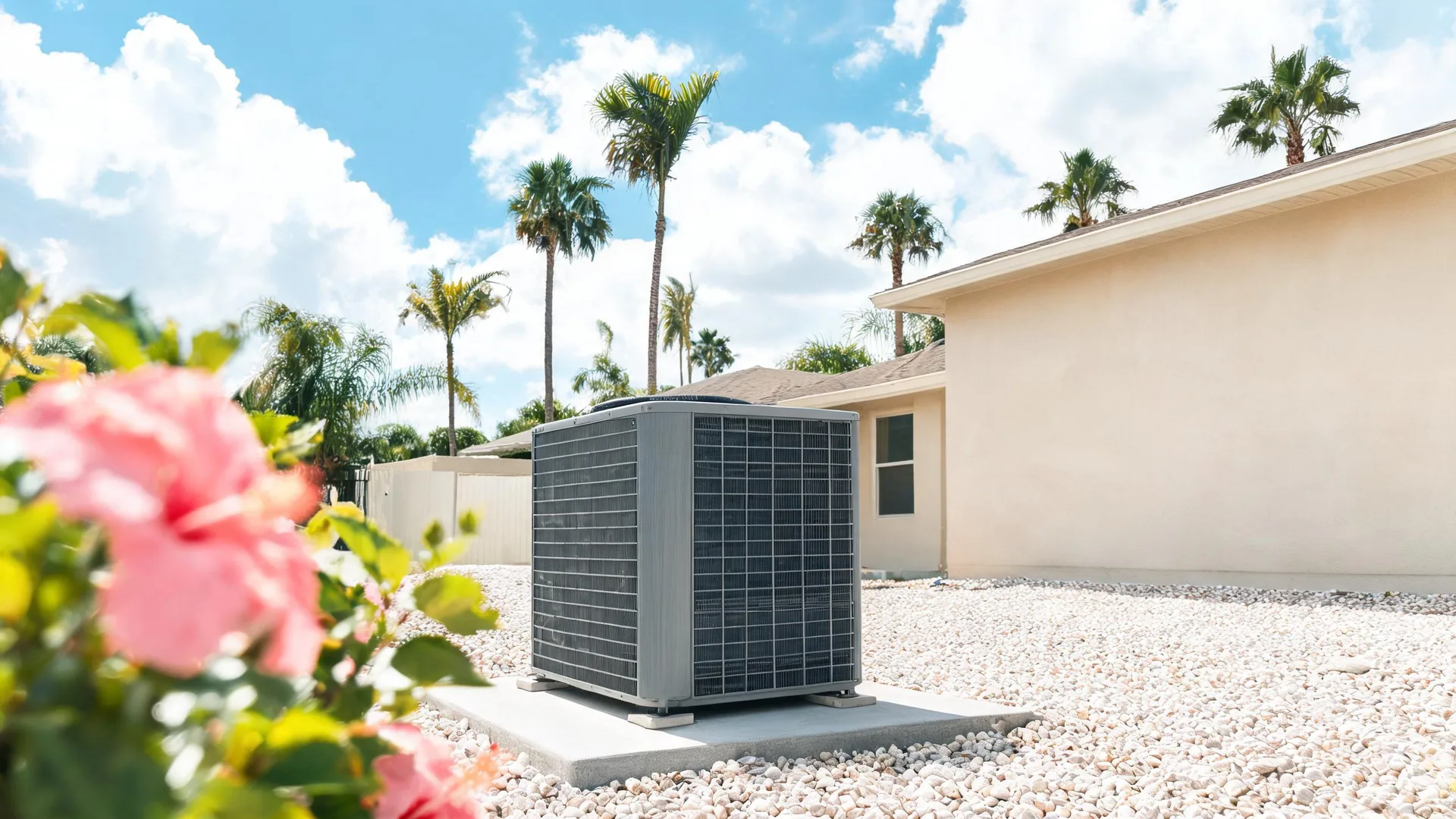
An outdoor central air conditioning unit mounted on a concrete pad beside a blue-sided house at sunset.

AC Repair in Ilion, NY

Tell us about the job

Takes about a minute. No obligation.

RepairCentral ACHerkimer County, NY
Step 1 of 2

What ZIP code is the job in?

Summer here doesn't push an AC hard

Afternoon highs average just 76°F through June, July and August in Herkimer County. An AC sized for this area rarely has to run flat out, and short cooling seasons mean far fewer total hours on the compressor compared to hotter parts of the country.


So a breakdown is usually about something specific

When a system here has a problem, it's seldom because the unit has been worked to the limit. Look instead at age, a part that's worn out on its own, or something that was never quite right since install. That's worth tracking down and fixing rather than writing off.

76°F
the average summer afternoon it cools against
19 hail events
in ten years, and hail bends the fins on outdoor coils
304 wind events
in ten years, and wind drives debris into outdoor units
Isometric illustration of a cutaway single-story house showing attic ductwork, an indoor air handler, interior rooms with furniture, and an outdoor condenser unit connected by lines, on a white background.
Your air conditioner works hardest from July through August.

NOAA nClimDiv, 1991–2020 normals

A capacitor weakens over time just from switching on and off, cycle after cycle, year after year.

A tech who checks the capacitor and the refrigerant charge first is looking at the parts that fail on their own schedule, not from a hard summer.

Ilion doesn't get weather that wears out an AC

391 severe weather events from 2015 to 2024
11% of homes statewide lost power a day or more in 2024
304 damaging wind events from 2015 to 2024
Ilion doesn't push an AC hardNew York homes paid 24.43 cents per kilowatthour for electricity in 2024

Since the unit isn't worn down by the season itself, a repair call is usually about getting a technician to actually find the fault rather than guessing at it. Have them check the capacitor and the refrigerant charge first, since those tend to fail on their own schedule and not from overuse. If the system has been fine for years and just started acting up, that points to one part giving out, not the machine wearing thin. That's a fault worth tracking down and fixing, not a reason to replace the whole unit.

It's usually worth repairing

It has an easier job here than in most places, so your air conditioner is often in decent shape. Repair is usually worth it.

Find a contractor
A man in a cap, dusty work shirt and tan trousers walks up front steps toward a dark green panelled door, carrying a canvas tool bag with hand tools, beside a potted shrub.
A gray cylindrical air conditioning condenser unit mounted on a concrete pad next to a light-colored vinyl-sided house exterior.

Running it while something's wrong rarely stays a small problem

Keep running an AC with a problem and the fault doesn't stay where it started. A system low on refrigerant will ice up the coil if it keeps cycling, and once that coil is coated in ice it can't pull heat from the air at all, so a simple charge now turns into a frozen coil later. A failing capacitor makes the compressor draw harder to start each time, and a compressor that strains on every start wears out its motor windings faster than one that starts clean. A clogged filter or blocked return starves the system of airflow, and a coil running too cold for too long can crack. None of that happens on day one. It happens because the unit kept cycling on a fault that was there from the start, trying to do its job with one part already failing.

What you'll actually notice first

Warm air out of the vents while the thermostat is set low. Short cycling, where the unit shuts off a few minutes after it starts. A hissing or bubbling sound near the indoor coil. Ice on the refrigerant line or the coil itself. Water pooling near the indoor unit when the drain line clogs. Any of these is worth a call before the next hot stretch, not after.

What the sound and smell tell you

A grinding or screeching from the outdoor unit usually means a motor bearing is going. A burning smell points to an electrical fault, often at the capacitor or a wire connection, and that one shouldn't wait. A musty smell from the vents usually means moisture sitting somewhere it shouldn't, often the drain pan or the coil itself.

An outdoor air conditioning condenser unit installed beside the exterior wall of a blue vinyl-sided house at sunset.

A new air conditioner would save little on running costs in Herkimer County, so the repair decision comes down to the unit's condition.

  • A new one at the federal minimum, 13.4 SEER2$80 a year
  • An older air conditioner$90 a year

Estimates for a typical Herkimer County home, compared with an older unit built to the previous federal minimum, from EIA household energy data, New York fuel prices and NOAA climate normals. Your home will differ.

Repair makes sense when a part like a capacitor or contactor has failed.

Replacement makes sense when the compressor has failed or the system uses R-22 refrigerant, which is no longer made.

A repair is worth doing when the fix is a known part with a known fault. A capacitor, a contactor, a fan motor, a slow leak that dropped the charge. Those are jobs with a clear before and after. Replacement starts to make more sense when the compressor itself is failing. That's the one part that isn't cheap to swap and isn't worth swapping on an old system. It also makes sense when the same fault keeps coming back after it's been fixed, because that usually means something else is driving it and the part keeps taking the damage. A tech who's found the actual cause can tell you which kind of problem you've got. Guessing at it from the symptoms alone usually can't.