



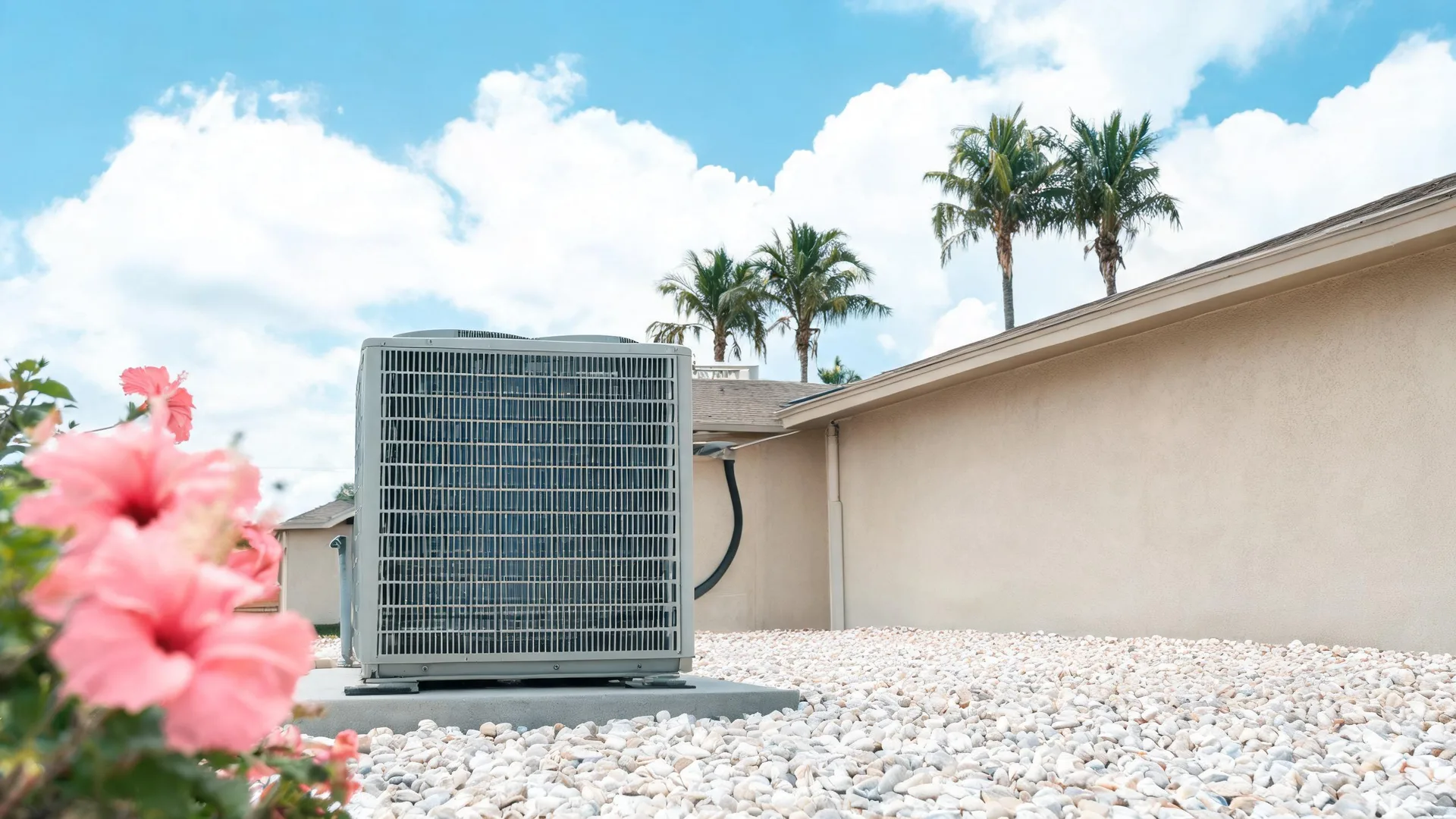
An outdoor air conditioning condenser unit on a concrete pad next to the gray vinyl siding of a residential home.

AC Repair in Glens Falls, NY

Tell us about the job

Takes about a minute. No obligation.

RepairCentral ACWarren County, NY
Step 1 of 2

What ZIP code is the job in?

Glens Falls only runs its air conditioning for about a month, July. Afternoon highs through the summer average 77 degrees, which is mild work for a compressor. A system here isn't fighting the kind of heat load you'd see further south, so it doesn't wear out from overuse. When one breaks down, the cause is usually something that failed on its own, a capacitor, a contactor, a low charge, not a machine run into the ground. That's good news if yours is acting up. Most of the time there's no reason to think about replacing it before you know what's actually wrong.

1 months
July through July, your air conditioner is on duty
77°F
the average summer afternoon it cools against
7 hail events
in ten years, and hail bends the fins on outdoor coils
192 wind events
in ten years, and wind drives debris into outdoor units
Isometric illustration of a cutaway single-story house showing interior rooms, ductwork running from an indoor air handler, and an outdoor condenser unit on a pad beside the building.
Your air conditioner works hardest from July through July.

NOAA nClimDiv, 1991–2020 normals

July is the only month cooling runs in Warren County.

June is when a weak capacitor or low charge finally gets found out.

Half these homes were built in 1973 or earlierHalf the homes in Warren County were built in 1973 or earlier, so an aging AC may be original to the house.

When a repair bill comes in, electricity rates have nothing to do with what broke, but they do affect what you're paying to run the system while it works right. New York runs 24.43 cents per kilowatt-hour, well above the national average. That makes a failing capacitor or a dirty coil cost more here than it would elsewhere, since either one makes the compressor work harder to do the same job. It's also a reason not to let a small problem sit. A system that's short-cycling or low on charge is pulling power without delivering the cooling you're paying for.

Get it diagnosed before you consider anything else

A system that's lasted this long without much strain is usually worth fixing rather than replacing. Find out what actually failed, then decide.

Find a contractor
A gray cylindrical air conditioning condenser unit mounted on a concrete pad next to a light-colored vinyl-sided house exterior.

What waits and what doesn't

A weak capacitor doesn't get better on its own. It makes the compressor's motor work harder to start and keep turning, and that extra effort shows up as heat in the windings. Run it that way long enough and the motor can fail outright. The same goes for a system low on refrigerant. Low charge means less of it flowing back to cool the compressor, so every hour it runs, it runs hotter than it should. Ice on the coil is a sign to shut the system off, not push through. With the coil iced over, the compressor can pull back liquid refrigerant instead of vapor, and that's a different kind of damage than running low for a while. None of this means every rattle or short cycle is urgent. It means some problems sit quietly if you catch them, and get worse the longer the system keeps running with them unresolved.

What you can check yourself

Look at the outside unit and see if the fan is spinning. Check the thermostat is set to cool and the batteries aren't dead. Go to the breaker panel and make sure nothing's tripped. Check your filter, a clogged one can choke airflow enough to shut the whole system down. These take a few minutes and they rule out the simplest causes first.

What to leave alone

Do not open the outside unit or touch anything inside the cabinet. The capacitor in there holds a charge even with the power off, and the refrigerant lines aren't something to loosen or disconnect. If the coil is visibly frozen, turn the system off and let it thaw rather than trying to chip at the ice. Past the breaker and the filter, the rest is a job for someone with gauges and training.

Aerial view of a residential air conditioning condenser unit mounted on a concrete pad next to a house with vinyl siding and a sliding glass door.

A new air conditioner would save little on running costs in Warren County, so the repair decision comes down to the unit's condition.

  • A new one at the federal minimum, 13.4 SEER2$90 a year
  • An older air conditioner$100 a year

Estimates for a typical Warren County home, compared with an older unit built to the previous federal minimum, from EIA household energy data, New York fuel prices and NOAA climate normals. Your home will differ.

Repair makes sense when a part like a capacitor or contactor has failed.

Replacement makes sense when the compressor has failed or the system uses R-22 refrigerant, which is no longer made.

A repair decision usually comes down to what broke, not how old the system is. A capacitor, a contactor, a fan motor, these fail on their own and fixing one tells you nothing bad about the rest of the system. Where it gets harder is the compressor itself. A compressor that's failing outright, or a refrigerant leak inside it, is a different conversation, since that part alone is worth a large share of the whole unit. The other thing worth asking is how the system has been running lately. One repair is just a repair. Repeated calls for different problems within the same season is the system telling you it's not failing randomly anymore, it's wearing out.