




Low-angle view across a grassy lawn toward a light-gray house with a dark shingled roof, dormer windows and dark shutters, framed by large leafy trees under an overcast sky.

AC Repair in Corning, NY

Tell us about the job

Takes about a minute. No obligation.

RepairCentral ACSteuben County, NY
Step 1 of 2

What ZIP code is the job in?

Cooling here only runs July through August. A system that sat idle since last summer gets switched on and asked to work right away, with no easing into it. If a capacitor is weak or the refrigerant charge is a little low, June is when it just sits quiet. July's first real heat is when it gets found out. A system struggling or making noise in these early weeks isn't bad luck, it's the usual weak part finally meeting a real load. Better to have it looked at now than to wait out the two months hoping it holds.

2 months
July through August, your air conditioner is on duty
78°F
the average summer afternoon it cools against
7 hail events
in ten years, and hail bends the fins on outdoor coils
179 wind events
in ten years, and wind drives debris into outdoor units
Isometric cutaway illustration of a single-story house with a dark shingled roof, showing interior rooms with ductwork and an indoor air handler connected to an outdoor condenser unit beside the building.
Your air conditioner works hardest from July through August.

NOAA nClimDiv, 1991–2020 normals

Corning's afternoon highs average 78°F even at the peak of summer.

An AC here spends most of the year resting, so a repair now is usually fixing one worn part, not a system worked to the edge.

Corning sees its share of storms, but that's not what's wrong with your AC

198 severe weather events from 2015 to 2024
11% of homes statewide lost power a day or more in 2024
179 damaging wind events from 2015 to 2024

Half the homes in Steuben County were built in 1963 or earlier. If yours is one of them, the AC outside probably isn't that old, but it's worth checking when it was put in. A system installed when the house was new, or even one swapped in since, still only lasts so many years. The repair itself is likely just the one worn part. But if the unit is getting up there in age, it's worth asking how many more of these repairs are ahead before a bigger one makes more sense than the next small fix.

Get it looked at early

Problems tend to show up in the first weeks of the season, when the load hits a part that was already weak.

Find a contractor
A gray metal air conditioning condenser unit mounted on a concrete pad in a flat grassy field under a partly cloudy sky.

Running it through the trouble rarely fixes the trouble

Keep running a struggling AC and a small problem finds a way to become a bigger one. A compressor working against low refrigerant charge runs hotter than it should, and heat is what wears a compressor out. A weak capacitor makes the motor labor on every start, and a motor that labors burns out sooner than one that starts clean. Ice on the coil blocks airflow, so the system runs longer to do less, and that long runtime is what lets the ice build further still. None of this fixes itself by waiting. A unit that sounds a little off at the start of the season is rarely quieter later on.

Most failures are one weak part, not a worn-out system

A capacitor loses its charge over time and stops giving the compressor and fan motor the kick they need to start. A contactor pits from years of arcing until it stops making clean contact. A fan motor bearing dries out and the motor starts dragging. Any one of these can stop an AC cold, and none of them means the rest of the system is going bad too.

Low refrigerant means a leak, not normal use

A sealed system doesn't consume refrigerant. If the charge is low, it's low because it's leaking out somewhere, usually a coil joint or a fitting that's worked loose. Adding refrigerant without finding and sealing that leak just means doing it again later. Worth asking whoever looks at it to find the leak, not just top off the charge.

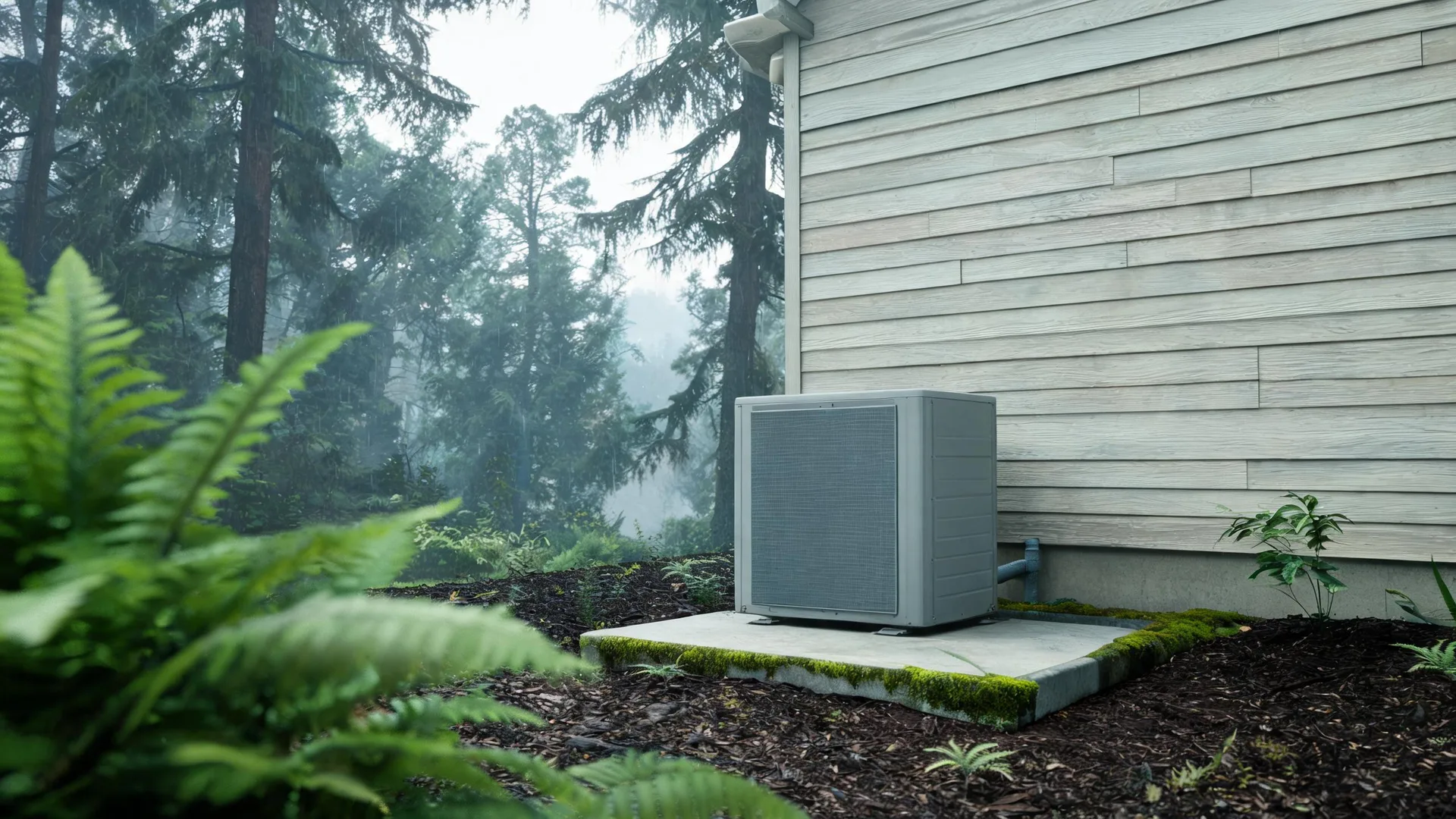
Overhead view of a gray outdoor AC condenser unit on a concrete pad beside a mulched garden bed and a house with vinyl siding.

A new air conditioner would save little on running costs in Steuben County, so the repair decision comes down to the unit's condition.

  • A new one at the federal minimum, 13.4 SEER2$130 a year
  • An older air conditioner$140 a year

Estimates for a typical Steuben County home, compared with an older unit built to the previous federal minimum, from EIA household energy data, New York fuel prices and NOAA climate normals. Your home will differ.

Repair makes sense when a part like a capacitor or contactor has failed.

Replacement makes sense when the compressor has failed or the system uses R-22 refrigerant, which is no longer made.

So how do you tell a repair from a replacement when nobody's told you yet which this is. Age and history matter more than the symptom in front of you. A compressor is the heart of the system, and it isn't something anyone replaces on its own. If that's what failed, the honest conversation is about the whole unit, not a part swap. A fan motor, a capacitor, a contactor, those get replaced on a system that still has years left, and doing so is just maintenance that came due. The other thing worth asking is whether this is the first repair or the third. One weak part failing is normal wear. A system that keeps finding new things wrong with it most summers is telling you something a single repair won't fix.