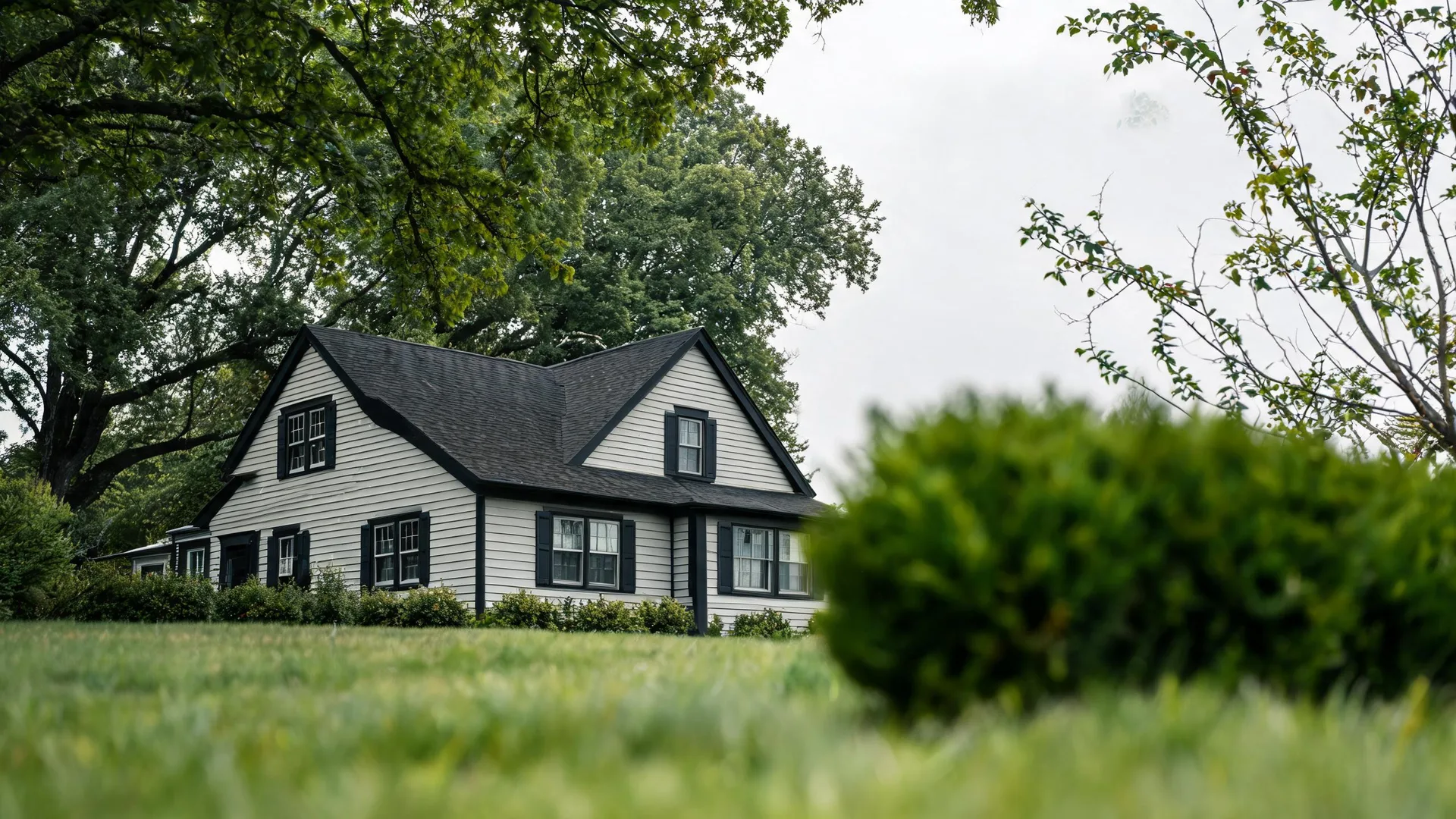






A white clapboard house with dark shingled roof, black shutters and dormer windows stands behind a lawn, framed by large trees and a blurred green shrub in the foreground.

AC Repair in Buffalo, NY

Tell us about the job

Takes about a minute. No obligation.

RepairCentral ACErie County, NY
Step 1 of 2

What ZIP code is the job in?

Your AC here only runs about two months a year, July and August, with afternoon highs averaging around 78°F. That's a short season and a mild one. A compressor in Buffalo isn't working nearly as hard as one in a place with a long, brutal summer, so it doesn't wear out the way you'd expect further south. When something does go wrong, it's usually not because the system got pushed past its limit. More often it's a part that's aged out or a connection that worked loose, the kind of thing a repair fixes for good. That's worth knowing before you decide whether to fix it or replace it.

2 months
July through August, your air conditioner is on duty
78°F
the average summer afternoon it cools against
31 hail events
in ten years, and hail bends the fins on outdoor coils
241 wind events
in ten years, and wind drives debris into outdoor units
Isometric grayscale illustration of a cutaway house showing interior rooms, ceiling ductwork connected to an indoor air handler, and an outdoor condenser unit linked by lines along the exterior wall.
Your air conditioner works hardest from July through August.

NOAA nClimDiv, 1991–2020 normals

July is when your AC turns on for the summer.

If a part sat weak all year, the first hot week in July is when it gives out.

Buffalo doesn't push an AC hard, so a breakdown usually comes down to one worn part

Power costs 24.43 cents a kWh statewide
Cooling runs July through August
Summer afternoons average 78°F

Erie County saw 241 damaging wind events between 2015 and 2024, plus hail and a handful of tornadoes. That sounds like a lot, but it's wind and hail hitting roofs, siding and trees generally. It's not a pattern of outdoor AC units taking direct hits. Winter storms show up often here too, but your AC sits idle under its cover all winter, so that weather doesn't touch it either. None of this adds up to your unit taking unusual punishment. So when it stops cooling, the cause is almost always something ordinary. A worn capacitor. A refrigerant leak. A contactor that pitted over time. Worth ruling out the simple things first.

Ask how much life is left before you pay for the repair

Half the homes in Erie County were built in 1957 or earlier. The house doesn't tell you the age of the AC itself, systems get replaced over the years, but if yours came with the house, it may be older than you think. Worth asking the contractor how much life is left in it before paying for a big repair.

Find a contractor
A man in a cap, dark jacket and tan work pants carries a worn canvas tool bag up concrete steps toward a dark green paneled front door of a house with horizontal siding and a potted shrub.
A gray residential air conditioning condenser unit mounted on a concrete pad outdoors, surrounded by green grass under a partly cloudy blue sky.

Most of the year, it isn't running at all

Two months of real work a year is not much wear to show up in a time-lapse. Most of what you'd see is this unit sitting idle, cover on, through the fall and winter and spring. That's the case for trusting a repair here. A part that's reached the end of its life needs replacing, but the system around it hasn't been run into the ground, so fixing the one part is usually enough to get years back out of it.

Check the thermostat and the breaker first

Make sure the thermostat is set to cool and set below room temperature, and change the batteries if the screen is blank or dim. Then check the breaker panel for the AC and the outdoor disconnect box next to the unit. A tripped breaker or a flipped switch looks exactly like a dead system.

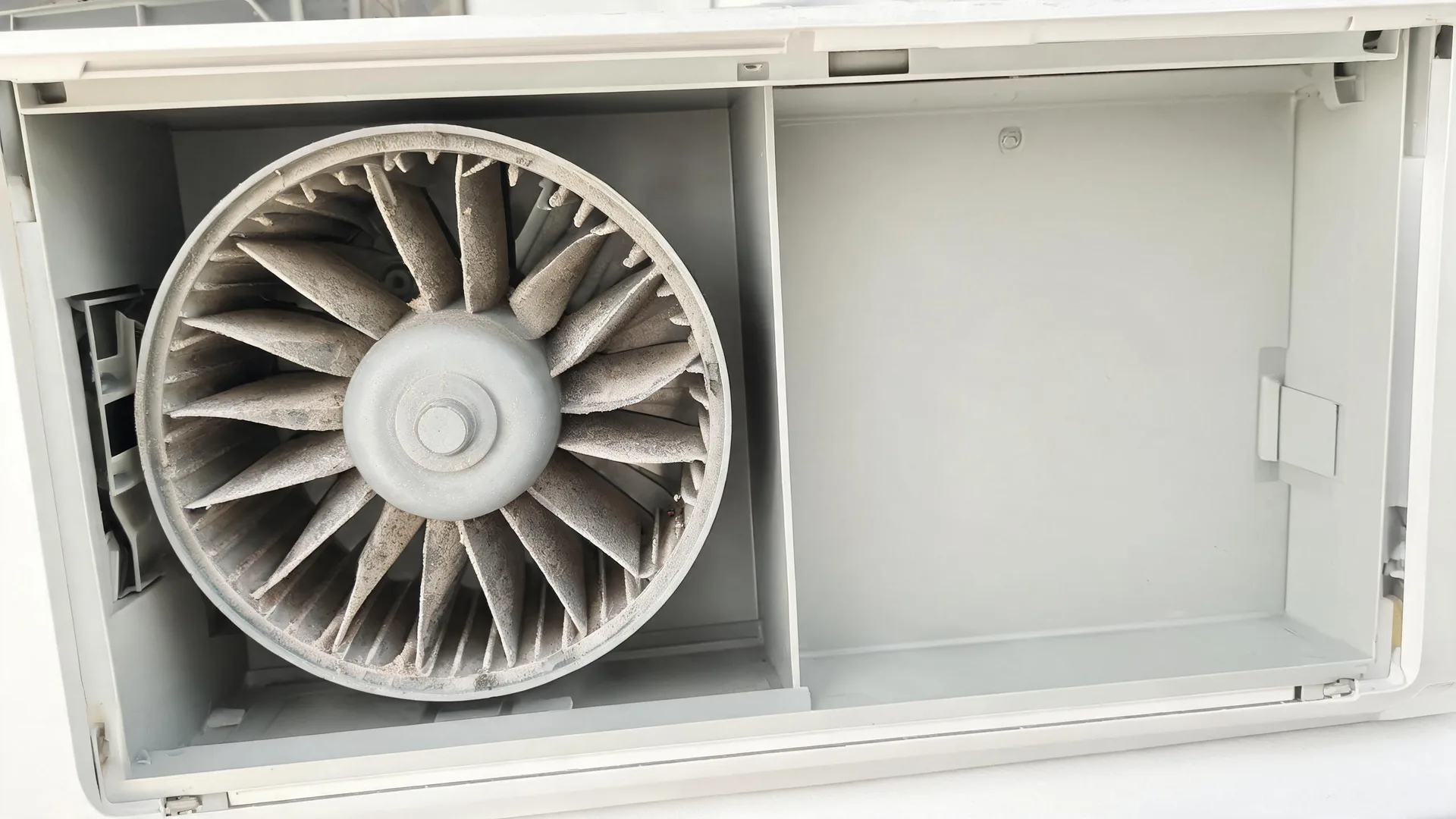
Look at the filter and the outdoor unit before you call

Pull the air filter and hold it up to a light. If you can't see through it, swap it. A clogged filter can choke airflow enough to ice the coil and shut the system down. Walk outside and check that the condenser isn't buried in leaves, grass clippings or a fallen branch, and clear debris from the sides and top so air can move through it.

Overhead view of a gray outdoor AC condenser unit on a concrete pad beside a mulched garden bed and a house with vinyl siding.

A new air conditioner would save little on running costs in Erie County, so the repair decision comes down to the unit's condition.

  • A new one at the federal minimum, 13.4 SEER2$170 a year
  • An older air conditioner$180 a year

Estimates for a typical Erie County home, compared with an older unit built to the previous federal minimum, from EIA household energy data, New York fuel prices and NOAA climate normals. Your home will differ.

Repair makes sense when a part like a capacitor or contactor has failed.

Replacement makes sense when the compressor has failed or the system uses R-22 refrigerant, which is no longer made.

A diagnostic call starts outside, at the condenser. The tech checks that the fan spins freely and that the compressor is pulling power the way it should, then moves to the refrigerant lines with gauges to see what the pressures are actually doing. Low pressure usually points to a leak somewhere in the line set or coil. Normal pressure with warm air coming out of the vents shifts the search indoors, to the blower motor and the coil itself. They'll pull the capacitor and test it, since a weak one is one of the most common reasons a unit hums but doesn't start. Electrical connections get checked too, because a contactor that's pitted or a wire that's worked loose can stop a system just as completely as a failed part. By the end, the problem usually traces back to one component, not the whole system.