






Aerial view of a square outdoor air conditioning condenser unit on a concrete pad beside a house wall with a sliding glass door.

AC Repair in Binghamton, NY

Tell us about the job

Takes about a minute. No obligation.

RepairCentral ACBroome County, NY
Step 1 of 2

What ZIP code is the job in?

Cooling only runs here from July through August, so a lot of systems sit idle most of the year. June is when it's worth checking yours before that first real hot stretch hits. A capacitor or contactor that was already weak tends to give out in the first week the system runs hard, not months in. If your AC is struggling now, that's usually what's going on, not something new wrong with the house or the unit. A repair gets it caught early instead of on the hottest day of the summer.

2 months
July through August, your air conditioner is on duty
79°F
the average summer afternoon it cools against
39 hail events
in ten years, and hail bends the fins on outdoor coils
248 wind events
in ten years, and wind drives debris into outdoor units
Isometric line illustration of a cutaway single-story house showing interior rooms, ductwork, an indoor air handler or furnace, and a refrigerant line running to an outdoor condenser unit on a pad.
Your air conditioner works hardest from July through August.

NOAA nClimDiv, 1991–2020 normals

A compressor that's low on charge keeps running hot and drawing down its own windings.

Shut it off at the first sign of trouble and the repair stays small.

Two months of real heat a year isn't what's breaking these systems

Power costs 24.43 cents a kWh statewide
Cooling runs July through August
Summer afternoons average 79°F

Only two months of real heat, so a repair is usually the right call

Two months of real heat a year is not much wear. A system here sits idle most of the year, so what fails is usually a part that was already going, not one worn down from the job. That makes most repairs straightforward and worth doing.

Find a contractor
A man in a cap, dark jacket and olive pants climbs porch steps toward a green front door, carrying a canvas tool bag filled with hand tools, with a potted shrub to the right.
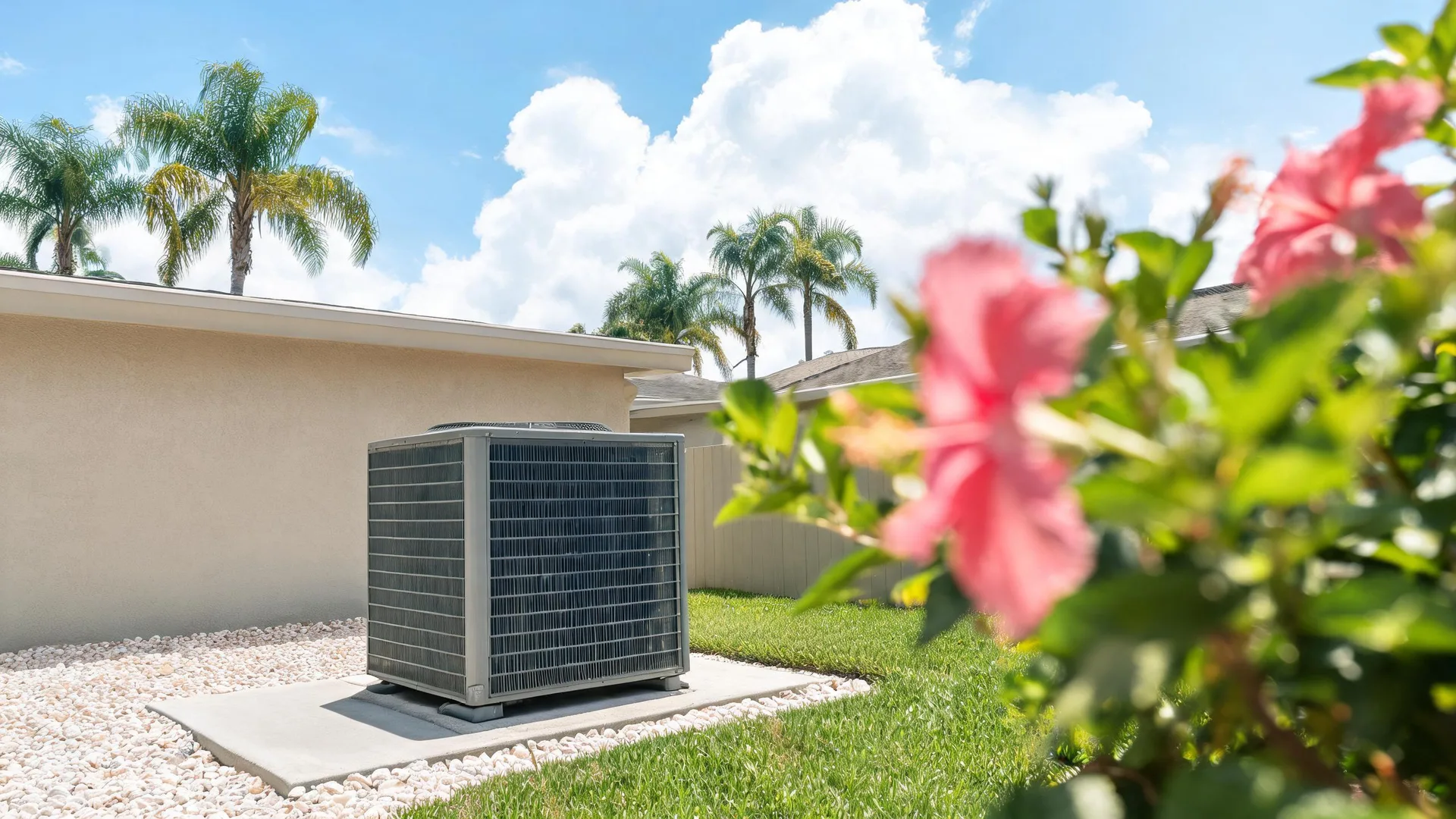
A gray residential air conditioning condenser unit mounted on a concrete pad outdoors, surrounded by green grass under a partly cloudy blue sky.

Find out what's left in it before you fix it again

If your system is the original from when the house was built, this may not be the first repair it's needed. A furnace or AC that's already on borrowed time is worth asking about before paying for another fix. Whoever comes out to look at it can tell you how much is left in it.

The air is on but it's not cold

Airflow from the vents with no real cooling behind it usually means the charge is low or the compressor itself is struggling. Running it this way doesn't fix itself and asking more of a struggling compressor only shortens what's left in it.

A sound that wasn't there before

A squeal, a rattle, or a hard clunk when the system kicks on is the unit telling you a part is wearing out before it fails outright. Catching it at the sound stage is a smaller job than catching it after that part lets go.

Overhead view of a gray residential air conditioning condenser unit mounted on a concrete pad beside a house with asphalt shingle roofing.

A new air conditioner would save little on running costs in Broome County, so the repair decision comes down to the unit's condition.

  • A new one at the federal minimum, 13.4 SEER2$140 a year
  • An older air conditioner$150 a year

Estimates for a typical Broome County home, compared with an older unit built to the previous federal minimum, from EIA household energy data, New York fuel prices and NOAA climate normals. Your home will differ.

Repair makes sense when a part like a capacitor or contactor has failed.

Replacement makes sense when the compressor has failed or the system uses R-22 refrigerant, which is no longer made.

The question is usually whether the part that failed is isolated or a sign the system's winding down generally. A capacitor or a contactor is a cheap, quick swap, and fixing it tells you nothing bad about the rest of the unit. A compressor is different. If that's what's going, the repair costs real money and the system's still old on every other part too, so you're paying to extend a machine that's going to need something else soon. Age by itself isn't the deciding factor. What matters is whether this repair is the first one or the latest in a string, and whether the part that failed is one that takes the rest of the system down with it or stands alone.