





A row of illuminated white colonial houses photographed at twilight along a tree-lined road with a stone wall in the foreground.

AC Repair in Auburn, NY

Tell us about the job

Takes about a minute. No obligation.

RepairCentral ACCayuga County, NY
Step 1 of 2

What ZIP code is the job in?

Auburn air conditioners only really work two months a year, July and August, with afternoon highs averaging around 78 degrees. That's a short, mild stretch compared to most of the country. A unit here isn't fighting the kind of heat that wears down a compressor or keeps a system running non-stop. So when something goes wrong, it's rarely because the machine has been pushed hard. More often it's age, a part worn out on its own schedule, or something missed at a tune-up. That makes repair worth looking at first, before assuming the system is done.

2 months
July through August, your air conditioner is on duty
78°F
the average summer afternoon it cools against
13 hail events
in ten years, and hail bends the fins on outdoor coils
160 wind events
in ten years, and wind drives debris into outdoor units
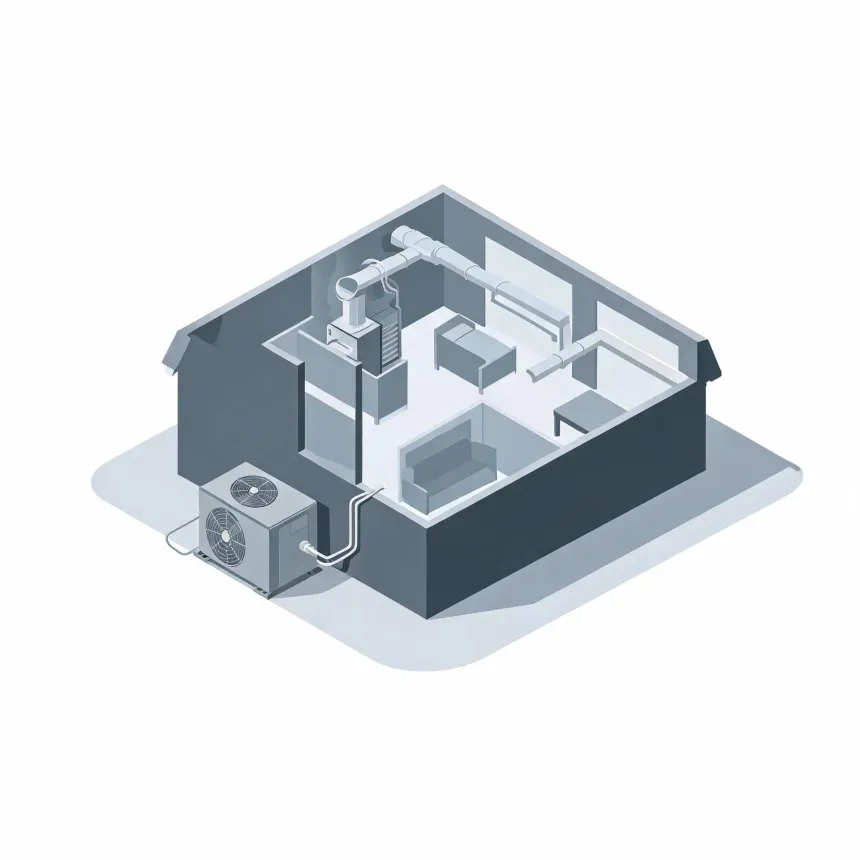
Isometric grayscale illustration of a cutaway house interior showing a furnace with ductwork, interior rooms with furniture, and an outdoor condenser unit connected by lines at the exterior wall.
Your air conditioner works hardest from July through August.

NOAA nClimDiv, 1991–2020 normals

Cooling in Auburn starts in July.

If your AC has a weak part left from last year, the first hot week in July is when it gives out.

Weather here isn't the problem. A worn part on its way out is.

206 severe weather events from 2015 to 2024
11% of homes statewide lost power a day or more in 2024
160 damaging wind events from 2015 to 2024
Weather isn't aging your AC. The house might be.If your AC is original to the house, ask what it's got left before paying for a big repair.

When a repair does come up, the bill is worth checking against the local electric rate, not just the national average you'll see quoted online. New York homes paid 24.43 cents per kilowatt-hour in 2024, well above what most of the country pays. That matters for a repair decision two ways. A system that's cooling poorly, maybe low on charge or stuck running longer than it should, is costing more here than the same problem would elsewhere. And it means a repair that gets the unit back to running efficiently pays for itself a little faster than the national numbers would suggest. Worth factoring in either way.

A system this lightly used is usually worth repairing

Get the actual problem looked at before you write the unit off. Two months of mild summer work doesn't wear out a compressor or a coil. A technician can tell you whether what's wrong is a quick fix or something bigger, but it's worth finding out first.

Find a contractor
An outdoor air conditioning condenser unit mounted on a concrete pad beside a house, with electrical conduit running to a wall-mounted disconnect box.

How old is the unit itself

If your AC is original to the house, ask the technician how much life is left in it before paying for a big repair. A compressor or coil replacement on a unit that old may not be worth it. A capacitor, a contactor, a thermostat, those are worth fixing on any system, any age.

What you can check from outside

Look at the outdoor unit. If the fan isn't spinning but you can hear a hum, that's usually a bad capacitor or a seized motor, not something to force or fix yourself. If nothing happens at all, check the breaker first. A tripped breaker that trips again right after you reset it means an electrical fault, and that's a call for a technician, not a second attempt.

What you can check inside

Pull the air filter and hold it up to a light. If you can't see through it, that alone can starve the system of airflow and cause the coil to ice up. Check the thermostat is set to cool and the temperature is actually below room temperature. Look at the vents for airflow. Weak airflow at every vent points to a duct or blower problem, not the thermostat.

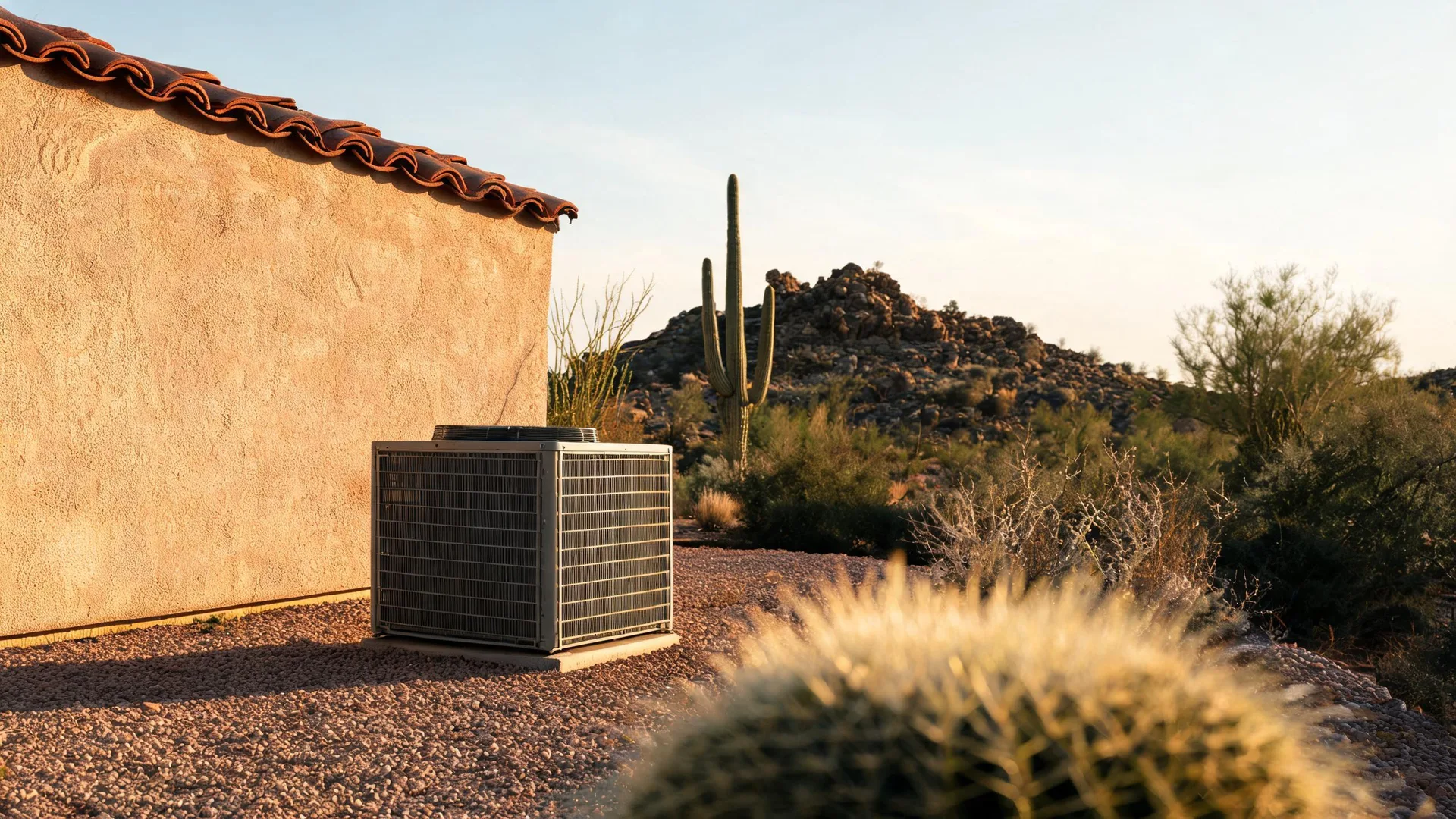
Overhead view of an outdoor AC condenser unit on a concrete pad next to a house with a dark shingle roof.

A new air conditioner would save little on running costs in Cayuga County, so the repair decision comes down to the unit's condition.

  • A new one at the federal minimum, 13.4 SEER2$170 a year
  • An older air conditioner$180 a year

Estimates for a typical Cayuga County home, compared with an older unit built to the previous federal minimum, from EIA household energy data, New York fuel prices and NOAA climate normals. Your home will differ.

Repair makes sense when a part like a capacitor or contactor has failed.

Replacement makes sense when the compressor has failed or the system uses R-22 refrigerant, which is no longer made.

A diagnostic visit starts outside at the condenser, then moves in. A technician checks the refrigerant charge with gauges, since low charge shows up as weak cooling and ice on the coil but isn't something you can see by looking. They'll test the capacitor and contactor, since those fail on a schedule that has nothing to do with how hard the system has run. Static pressure gets checked in the ducts, because a blower working too hard against a clogged filter or a closed vent wears out before its time. Electrical connections get checked too, since a loose wire at the disconnect can mimic a failing part and send you toward the wrong repair. By the end, you should have a part named, not a guess.